
Condo Association Roof Replacement: The Comprehensive Planning Guide for Property Management
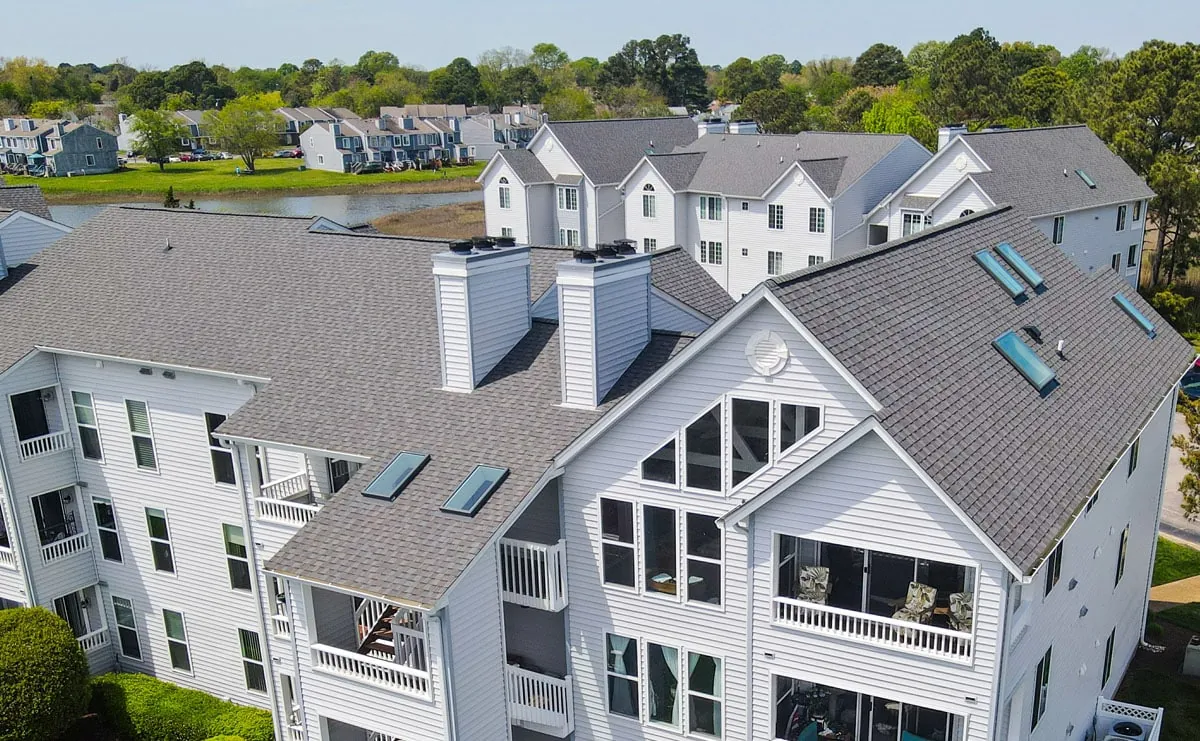
HOA & COA Roof Replacement Information You Can Use
Condo ownership comes with shared responsibility. Within these relationships, roof replacement is one of the largest and most complex capital projects your Property Management (PM) firm will ever manage for its portfolio associations.
Done well, it protects your client’s assets, stabilizes budgets, and preserves property values. However, if done poorly, it leads to leaks, emergency assessments, and conflict that reflects poorly on your firm.
We want to provide a guide that outlines how property managers and condo associations plan and execute roof replacement, effectively manage contractor selection, handle insurance claims, and protect the association’s long-term investment.
If you have questions that we don’t cover, please call us or use this form to reach out to us.
Responsibilities of Property Managers in Capital Projects
Effective portfolio management requires proactive oversight of major repairs. In most condominium communities, the property management firm supports the association by managing:
- Common Element Oversight: Maintaining and replacing roofing on common elements.
- Financial Stewardship: Guiding boards on funding inspections, repairs, and replacements through dues and reserves.
- Vendor Vetting and Management: Hiring qualified roofing contractors and managing contracts according to association guidelines.
- Resident Communication: Communicating scope, timelines, and disruptions to unit owners to minimize friction.
When these responsibilities are handled consistently and transparently, roof replacement projects are more predictable, less disruptive, and easier for boards and owners to support.
→ Above Roofing specializes in working with condo associations and property managers.
Starting With a Condo Roof Assessment
If the association does not have a current roofing strategy, begin with a full assessment.
Select a Reputable, Specialized Vendor
Use a reputable, local roofing company with condo and multi-building experience.
Prioritize Comprehensive, Multi-Building Inspection
Inspect all buildings, not just those with obvious leaks.
Determine Remaining Useful Life (RUL)
Identify remaining useful life (RUL) for each roof system.
Define Capital Planning Priorities
Prioritize which buildings need replacement first and establish realistic timelines and budget ranges based on age and condition.
The assessment becomes the foundation for the board’s capital planning, accurate reserve studies, and transparent communication with owners.
The Fiduciary Importance of Timely Roof Replacement
When an assessment shows that roofs are near the end of their service life, delaying replacement significantly increases financial risk and damages the property manager’s reputation for proactive management.
Timely replacement helps in several key ways.
Prevents Escalating Damage
Timely replacement prevents leaks, ceiling damage, attic damage, and mold growth, reducing expensive interior restoration costs.
Stabilizes Maintenance Budgets
It reduces emergency repair calls and protects structural components, helping stabilize operating budgets and minimizing unpredictable owner special assessments.
Protects Client Assets and Property Value
Maintaining or increasing property values demonstrates responsible governance to current owners and improves marketability to future buyers. Condominium communities with new or recently replaced roofs typically present better to buyers and appraisers than buildings with worn, failing roofing systems.
Selecting the Right Roofing Vendor for Managed HOAs and COAs
The contractor selection decision determines how smoothly the project runs and reflects directly on your property management firm’s ability to manage high-quality vendors.
Non-negotiable Vendor Vetting Criteria
Requires proven experience with condos, HOAs, and multi-building projects; proper licensing and insurance; and references from other local associations or property management firms. A strong portfolio showing similar project types and scale is mandatory.
Key Selection and Vetting Criteria
Focus on quality and ethics, not just the lowest price. Demand a clear written scope (including tear-off, underlayment, ventilation, flashing, and cleanup), detailed written warranties covering both materials and workmanship, and strong job-site safety practices with clear resident communication procedures.
The cheapest proposal often signals weak materials, shortcuts, or poor documentation that will cost the association more in the long run.
Common Roofing Materials and Durability Factors for Condominiums
Choosing the right roofing materials requires balancing performance, cost, durability, and compliance with association standards.
Material and Performance Considerations
Most condo communities use asphalt shingles on pitched roofs, but not all shingles are equal. Property managers should guide the board in reviewing options based on performance and longevity, including architectural versus basic 3-tab shingles, wind ratings, impact resistance, and algae resistance. Manufacturer reputation and warranty terms should also be part of the evaluation.
Adhering to Governing Documents and Cost Strategy
Avoid ultra-cheap shingle lines with low durability and poor warranty support. Confirm that selected materials comply with association covenants and architectural standards, such as color and profile restrictions. Review all material options in writing, including warranty lengths and limitations, since cutting corners often leads to earlier failure and a shorter replacement cycle than expected.
Documentation and Transparency for Property Managers
Clear documentation and transparent recordkeeping protect both the association and the property management firm throughout the life of a roofing project.
Mandatory Project and Financial Records
Property managers must track before-and-after photos of each building, initial inspection reports, vendor estimates, and final invoices.
Warranty and Liability Records
Maintain easily accessible copies of all manufacturer and contractor warranties. Document all change orders, scope adjustments, and any additional repairs for accurate historical reference.
Claim and Correspondence Archiving
Track all correspondence related to insurance or warranty claims. This documentation is essential for protecting the association during future disputes.
Keep these records in an organized, accessible format, ideally in a cloud-based folder structure, so future boards and property managers can reference them quickly and seamlessly.
Critical Roofing Mistakes PMs Must Help Associations Avoid
Even well-funded projects can fail when common details are overlooked, so property managers should help boards watch for the following mistakes:
- Selecting the Lowest Bid or Quality: Choosing the cheapest contractor or lowest-quality shingles.
- Hiring Inexperienced Contractors: Engaging vendors with weak credentials or no specialized multi-unit experience.
- Neglecting Ventilation Upgrades: Failing to upgrade and properly balance attic ventilation during replacement.
- Reusing Critical Flashing: Reusing or failing to replace vulnerable components like step flashing and apron flashing, which are common points of water intrusion.
- Skipping Drip Edge: Improperly installing or omitting the drip edge entirely.
- Poor Fastener Selection: Using incorrect nails or fasteners for the deck material or shingle system.
Avoiding these mistakes helps protect the association’s investment, reduces callbacks and disputes, and extends the overall lifespan of the roofing system.
→ For more roofing mistakes to avoid, read: 20 Common Roofing Mistakes Made By Substandard Contractors
Managing Insurance Claims and Documentation
When roof replacement is driven by a storm or other covered event, the association may file an insurance claim. The property manager plays a key role in keeping the process organized, timely, and well documented.
Claim Submission and Documentation Protocol
When replacement is driven by a covered event, the property manager must manage the claim process diligently. The core first step is to document damage thoroughly with before-and-after photos, inspection notes, and dates.
Engaging a Trusted Vendor for Claim Reporting
Engage a reputable roofing contractor (Above Roofing) to provide detailed damage reports and repair and replacement estimates. This ensures accurate cost and scope documentation for the insurer. Submit all required documentation to the insurer on time.
Submission, Review, and Negotiation
Submit all required documentation to the insurer on time. Review the adjuster’s findings carefully and be prepared to clarify the scope, including code upgrades and manufacturer requirements, before final approval.
In some cases, coverage limits, exclusions, or deductibles may mean the association still needs to fund part of the project from reserves or special assessments, which the property manager must budget for.
Policy Coverage Review and Governing Documents
Clear policy interpretation and documented responsibility help prevent confusion when a leak, storm event, or claim puts the association under pressure.
Master Association Policy vs. Owner Policy (HO-6)
Understanding coverage avoids surprises and reduces disputes. Property managers must ensure the board understands the master association policy coverage for roofs and common elements, specifically differentiating it from individual owner policies (HO-6) and how they address interior damage from roof leaks.
Coverage Exclusions and Limitations
Review policy exclusions and limitations carefully, distinguishing between covered events (sudden storm damage) versus non-covered causes (wear-and-tear or deferred maintenance). Also, check for any endorsements or extended replacement cost coverage options that may affect future assessments.
Compliance with Governing Documents
Restrictive covenants and governing documents define the ultimate maintenance and replacement responsibilities. Clarity on who pays for what reduces disputes after a leak or storm event.
Preventing Leaks and Protecting the New Investment
A new roof is not a “set and forget” item. Proactive prevention protects the association’s significant investment and shields the property manager from unnecessary emergency calls.
- Regular Professional Inspections: Schedule routine roof inspections by a professional contractor, recommended twice annually in the spring and fall.
- Clear Drainage: Perform routine cleaning of gutters and downspouts to ensure proper water flow and prevent overflow damage.
- Address Ponding and Drainage Issues: Promptly correct any drainage problems or water ponding on flat roof systems.
- Check Vulnerable Points: Conduct ongoing inspection and replacement of failing roof vent pipe boots and sealant around penetrations.
- Attic Health Monitoring: Perform regular checks for attic moisture, condensation, and proper ventilation function to prevent structural and mold issues.
Small issues handled early stay small. Deferred maintenance turns minor defects into major repairs.
→ Read our article: The Essential Guide: Roof Maintenance for Condo Associations
Maximizing Return on Investment (ROI) Through Quality Installation
A roof replacement delivers the strongest long-term value when material selection, installation quality, and ongoing maintenance are all managed with consistency and documentation.
Prioritize Material Quality and Climate Suitability
To maximize ROI, the property manager should guide the board to use high-quality, durable materials that are best suited to the specific weather conditions of West Michigan, including wind resistance and thermal extremes.
Ensure Vendor Compliance and Specification Adherence
Hire experienced roofing contractors who follow manufacturer specifications precisely. Installation shortcuts can void manufacturer warranties, which destroys ROI.
Warranty Protection and Documentation
Verify that all installation requirements for manufacturer warranties are rigorously met. Collect, organize, and store all warranty documents and related contractor sign-offs.
Establish a Long-Term Maintenance Schedule
Create and enforce a written maintenance and inspection schedule. A new roof must be maintained to deliver its full intended service life.
Condo Roof Replacement: Securing Your Client’s Major Capital Project
Roof replacement is the largest single capital investment in most condominium communities. Success depends entirely on accurate assessment, careful vendor vetting, clear documentation, and robust ongoing maintenance management.
Well-planned projects, managed by a proactive property management firm, deliver four key outcomes:
- Protect client assets from leaks and structural damage.
- Reduce unplanned costs, eliminating the need for emergency assessments.
- Increase buyer confidence and property values across the portfolio.
- Provide owners with confidence in the association’s governance and your firm’s management capabilities.
Taken together, these outcomes reinforce the value of proactive planning and disciplined execution when managing one of the most significant capital projects an association will face.
Above Roofing: Your Trusted Partner for West Michigan Portfolio Management
Above Roofing serves property managers and condo associations across West Michigan with a focus on quality, documentation, and streamlined communication, the essential components for successful portfolio management.
Key Partnership Benefits
- Licensed and insured contractor specializing in multi-unit properties for over 25 years.
- Local offices in Jenison, Holland, and Grand Rapids for fast, reliable response times.
- Provides detailed inspection reports tailored for board review and reserve analysis.
- Lifetime Workmanship Warranty on qualifying projects.
Property Managers Rely on Above Roofing for
- Full condo roof assessments and remaining useful life (RUL) reports.
- Replacement plans and phased project strategies tailored to association budgets.
- Detailed inspection and documentation support for insurance claims.
- High-quality installation that protects manufacturer warranties.
Partner with the West Michigan condo roofing experts. Contact Above Roofing today at (616) 662-7663 for a no-obligation strategic consultation on managing roof replacement and capital planning for your entire portfolio.