
Do Gutters Cause Ice Dams? What Michigan Homeowners Need to Know
There are many misconceptions surrounding ice dams. One of the most common questions we get from Michigan homeowners is:
“Don’t gutters cause ice dams?”
Our quick answer is no.
If you’re seeing large icicles hanging from your gutters or noticing water stains on your ceiling during winter, it’s understandable to assume the gutters are the problem. But ice dams are rarely caused by a single component.
Your roofing system is complicated, and ice dam formation is influenced by several factors working together, especially in Michigan’s winter climate.
Some areas receive snow but don’t experience prolonged freezing temperatures. West Michigan homeowners, however, know cold. In Grand Rapids, Holland, and surrounding areas, long stretches of sub-freezing weather create ideal conditions for ice dams to form.
Our goal is to help you understand:
- What an ice dam is
- Why gutters aren’t the culprit
- What actually causes ice dams
- And how to prevent ice dams in Michigan homes
What Is an Ice Dam?
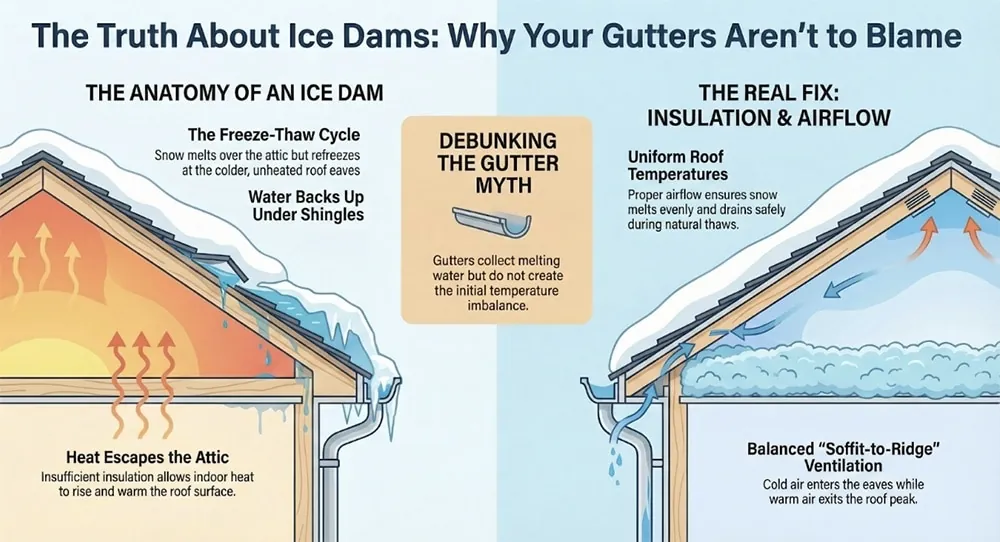
Ice dams form when snow on your roof melts due to heat escaping from your home. That melted snow travels down toward the edge of the roof, where temperatures are colder, and refreezes. Over time, this creates a ridge of ice along the eaves — known as an ice dam.
The danger comes next.
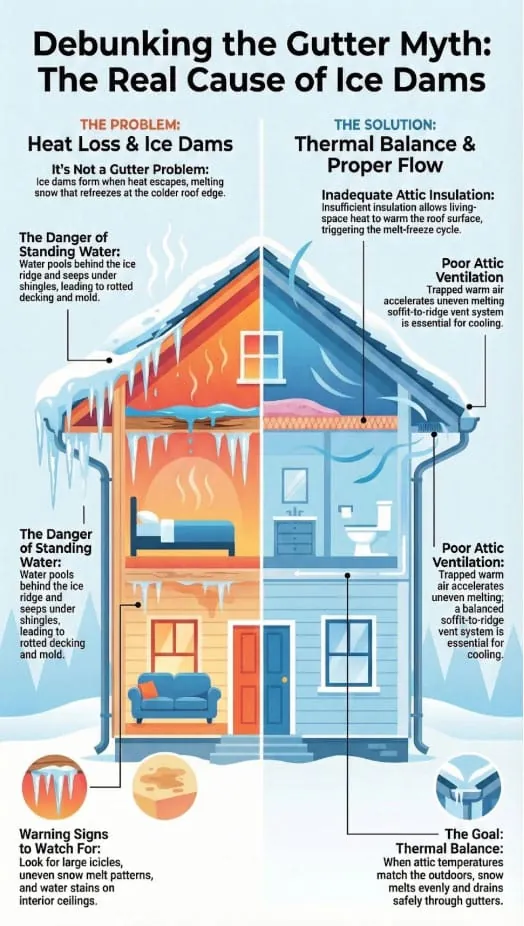
As snow continues to melt higher up on the roof, water pools behind that ridge of ice with nowhere to drain. When this happens, water can work its way underneath shingles and into your home.
This is when ice dam damage begins.
Why Ice Dams Can Damage Your Roof
You do not want water sitting on or under your shingles.
While roofing systems include protective underlayment beneath the shingles, shingles are designed to shed water, not hold standing water. When water backs up due to an ice dam, it can soak into the roof decking.
Over time, this can lead to:
- Rotted roof decking
- Interior ceiling leaks
- Insulation damage
- Mold and mildew growth
- Costly roof repair in Michigan winters
This is why ice dams should be taken seriously, especially in areas like West Michigan, where snow can remain on roofs for weeks at a time.
The Real Cause of Ice Dams: Insulation and Ventilation Problems
The biggest contributors to ice dams are inadequate attic insulation and poor attic ventilation.
And yes, the issue usually starts below your roof, inside your attic.
How Insulation Contributes to Ice Dams
When attic insulation is insufficient, heat escapes from your living space into the attic. That heat warms the roof surface, causing snow to melt, even when outdoor temperatures are below freezing.
At first, melting snow might seem like a good thing. But here’s the problem: The roof edge (or eave) extends beyond the heated portion of your home. That area stays much colder.
When melted snow travels down and reaches that colder section, it refreezes. This process repeats over time, gradually forming an ice dam along the edge of the roof.
How Airflow and Roof Ventilation Play a Role
Insulation is only part of the equation. Proper attic airflow is just as important in preventing ice dams.
Even with good insulation, some heat will rise into the attic. That heat needs a place to escape.
When ventilation is poorly designed, warm air becomes trapped inside the attic. This raises attic temperatures and accelerates uneven snow melt across the roof.
Proper attic ventilation allows:
- Cold air to enter through the soffit or edge vents
- Warm air to exit near the roof peak through ridge vents, box vents, or powered vents
In most Michigan homes, a properly balanced soffit-to-ridge vent system is the most efficient design.
When attic temperatures remain close to outside temperatures, snow melts evenly, and ice dams are far less likely to form.
Why Ice Dams Are So Common in Michigan Homes
Michigan winters create the perfect storm for ice dam formation:
- Heavy snowfall
- Long periods below 32°F
- Snow sitting on roofs for extended periods
Without proper attic insulation and ventilation, heat loss causes uneven melting and refreezing cycles, the exact conditions that create ice dams.
When attic temperatures are properly controlled, snow typically melts only when outdoor temperatures rise above freezing. At that point, the snow across the entire roof melts evenly and drains safely through the gutter system.
Signs Your Home May Be at Risk for Ice Dams
If you notice any of the following, your home may have insulation or ventilation issues:
- Large icicles hanging from gutters
- Uneven snow melt patterns on your roof
- Ice buildup along the eaves
- Water stains on ceilings during winter
- A warm attic during freezing temperatures
These are warning signs that should not be ignored.
Final Thoughts: Gutters Are Not the Cause
Gutters do not cause ice dams.
Ice dams are the result of heat loss, insulation gaps, and improper attic airflow. Gutters may collect melting water, but they are not responsible for the temperature imbalance that creates ice dams in the first place.
If you’re dealing with recurring ice dams in Grand Rapids, Holland, or anywhere in West Michigan, the real solution isn’t removing gutters; it’s addressing insulation and ventilation issues before next winter arrives. A professional roof and attic evaluation can help identify the root cause and prevent costly ice dam damage in the future.