
Chimney caps that keep water out — for good.
Custom stainless steel chase caps for vinyl, wood and brick chimneys — supplied and installed by Above Roofing, a certified Recapture Services installer.
We supply and install every chimney cap — professional installation only.
If you've been told you need a new chimney cap — or you're seeing rust streaks down your chimney or water stains on the ceiling near it — the problem is usually the metal cover on top of your chimney chase. Most homes were built with a thin, flat, galvanized cover. Over time the zinc coating wears off, the metal rusts, the top sags, and water pools right next to the flue. Once the caulk around the flue gives out, that water heads straight into your chimney chase, your attic, and your ceilings. Above Roofing is a certified installer for Recapture Services, a West Michigan manufacturer that has been building stainless steel chimney caps for nearly 20 years. Every cap is custom-built to fit your chimney, with a sloped top that sheds water instead of holding it, and stainless steel that won't rust like galvanized metal. We measure, order, and install it — so your chimney stops being the weak spot on your roof.
Everything you need, nothing you don't.
Stainless steel, not galvanized
Won't rust out like the thin galvanized covers most homes were built with.
Custom-built to fit
Measured and fabricated for your exact chimney — single-flue or multi-flue.
Certified installation
Supplied and installed by our crew as a certified Recapture Services installer.
Real job, real results.
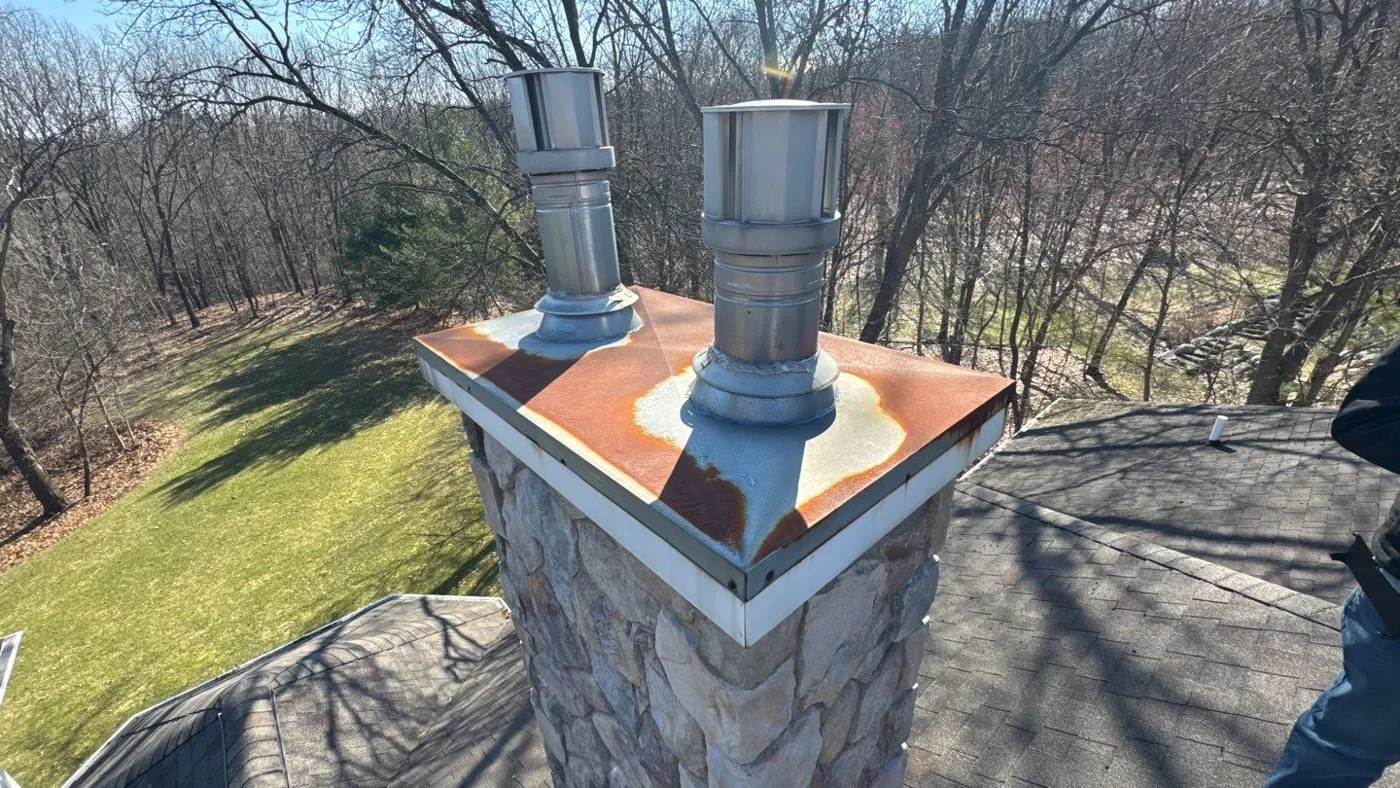
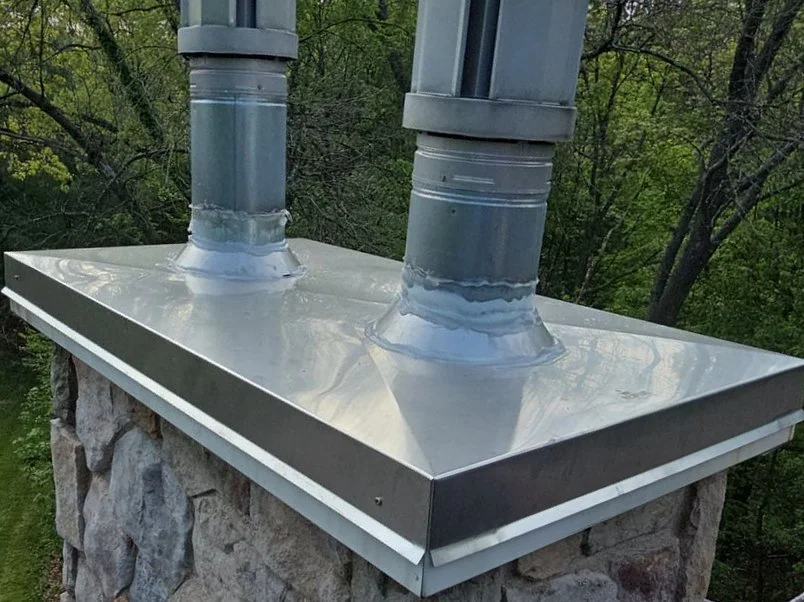
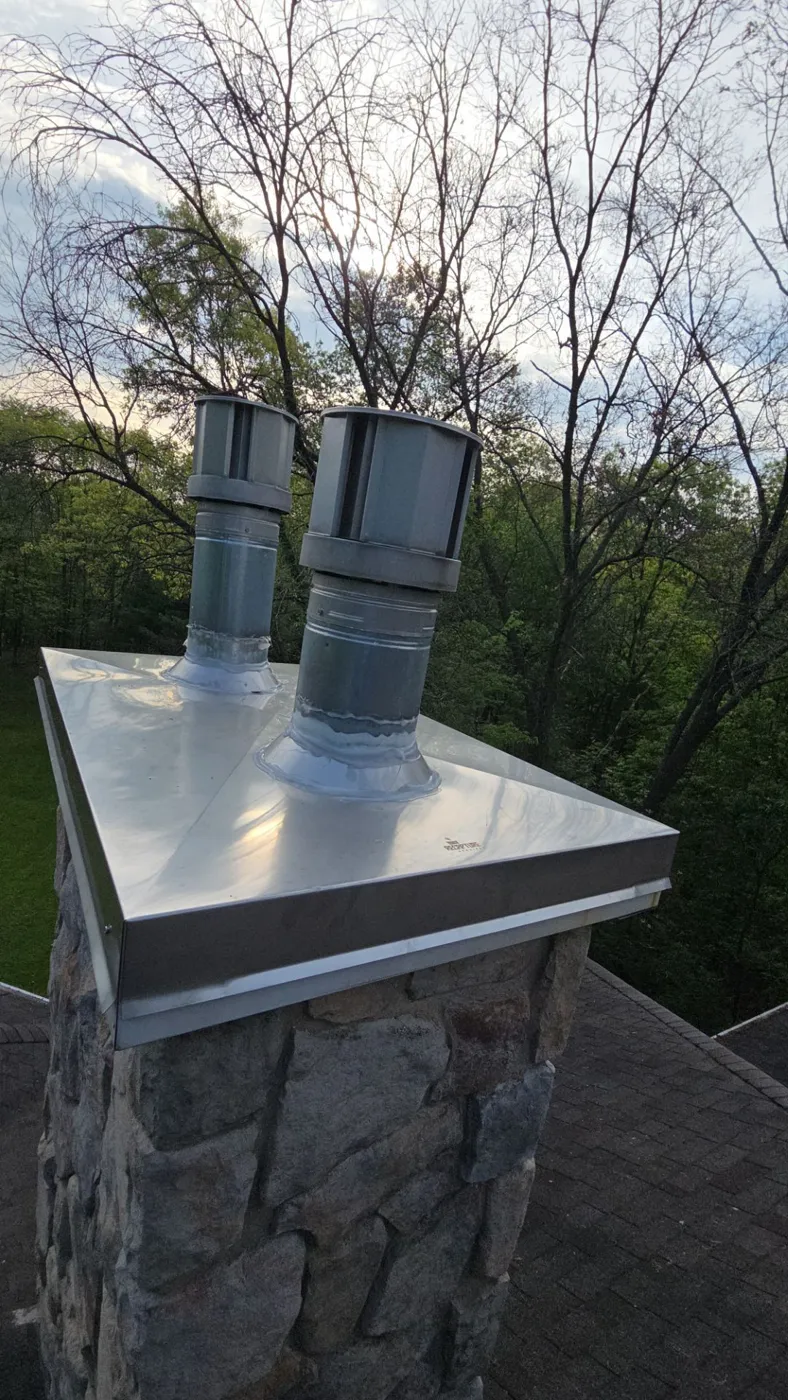
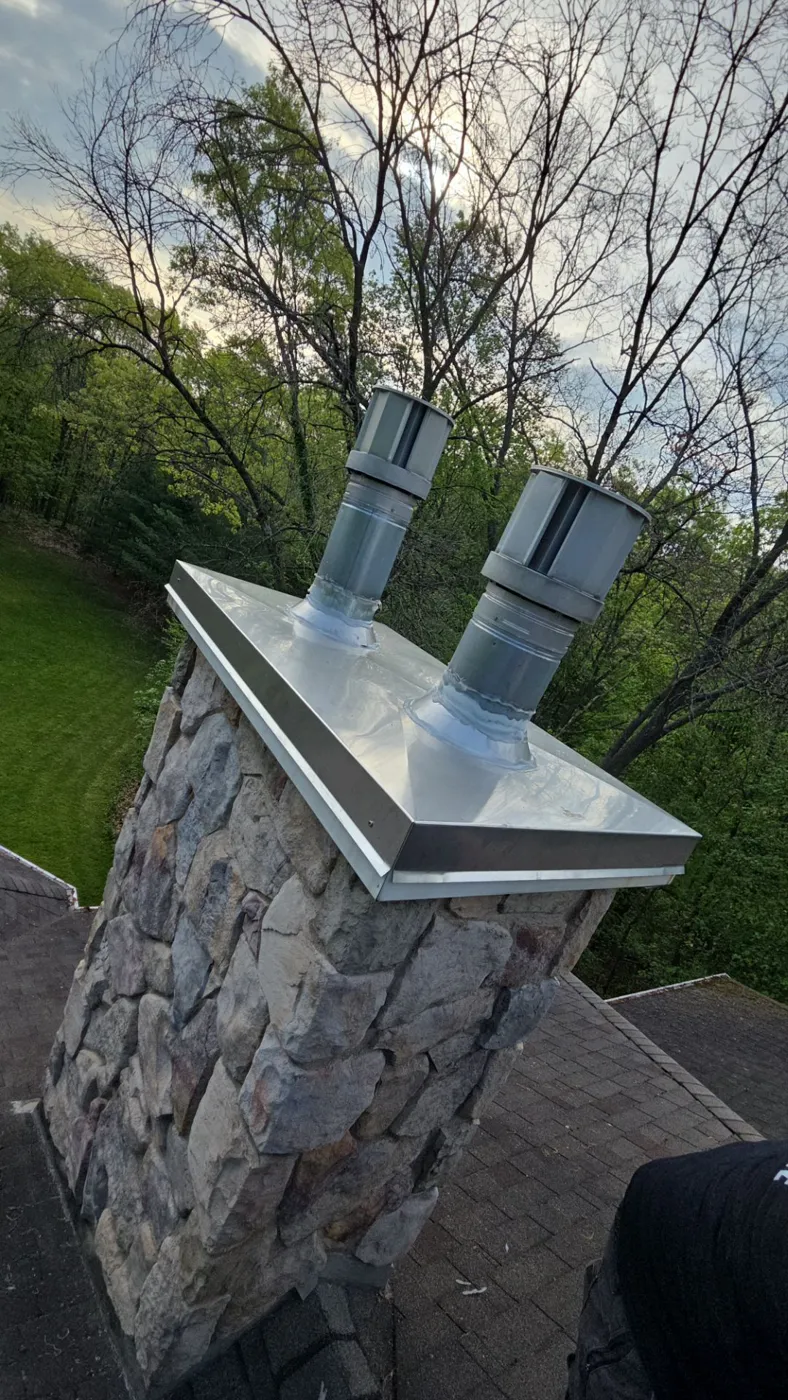
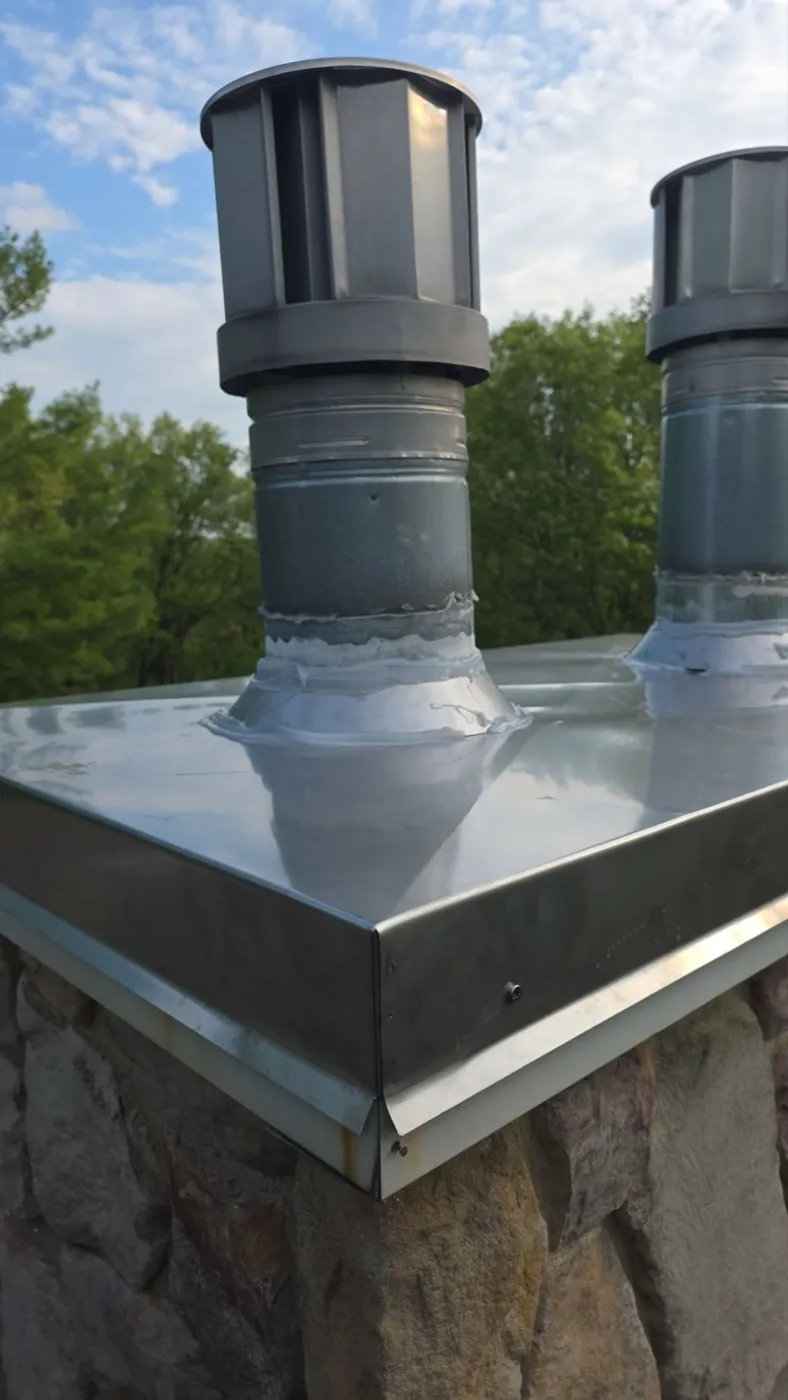
This stone chimney had the original galvanized chase cover — rusted through, with water sitting around both flues. We replaced it with a custom Recapture stainless steel cap with a sloped top, a drip edge, and fully sealed flue collars.
Signs your chimney cap needs replacing.
- Rust on the cover, or rust streaks running down the chimney
- A flat top that sags or holds standing water after rain or snow melt
- A loose, warped or rattling cover — especially in high winds
- Cracked or failing caulk around the flue pipe
- Loose siding, trim or flashing on the chimney chase
- Water stains on ceilings or walls near the chimney
Not sure? We'll take a look during a free inspection and give you an honest answer.
Get Your Free Inspection →Stainless steel, built to last.
Get Your Free Roof Inspection From One Of Our Roofing Experts
With Our Simple, Hassle-Free Process
Free Roof Inspection
Contact us to schedule your no-pressure, Free Roof Inspection.
Results
We give you on-the-spot results and walk you through our findings.
Schedule
We answer any questions and discuss scheduling.
Three things we refuse to compromise.
Integrity
We tell the truth, even when it costs us the job. No pressure, no scare tactics, no upsells you don't need.
Care
We respect your home, your time, and your investment — from the first phone call to the final cleanup.
Craftsmanship
We install complete roofing systems designed to last, using materials and methods we'd put on our own homes.
Questions our neighbors ask.
What's the difference between a chimney cap and a chase cover?
On chimneys with siding or wood around them (a "chase"), the metal cover that sits over the whole top of the chimney is often called a chase cover or chase cap. It's the part that keeps rain and snow out of the chase. We replace the whole cover with a custom stainless steel one.
Why does my chimney cap rust?
Most original covers are thin galvanized steel. The zinc coating wears away over time, then the steel underneath rusts. Flat tops make it worse because water sits on them.
Why stainless steel?
Stainless steel resists rust and corrosion, the main reasons chimney caps fail. Combined with a sloped top that sheds water, it's built to last far longer than a galvanized cover.
Do you install caps on brick chimneys too?
Yes. We install Recapture stainless steel caps on vinyl-sided, wood-sided, and brick chimneys, with single or multiple flues.
Can I buy a cap from you and install it myself?
No. Just like our skylights, we supply and install — professional installation only.
Can a leaking chimney cap cause damage inside my home?
Yes. A failing cover lets water into the chase, which can lead to rot, mold, and stained or damaged ceilings. Replacing it early is much cheaper than fixing water damage later.
Can you replace my chimney cap when you replace my roof?
Yes, and it's a great time to do it since we're already on the roof. Ask your Above Roofing project consultant to include it in your estimate.
Ready for an honest look at your roof?
Schedule a free, no-pressure inspection. We'll tell you exactly what we see — even if that means you don't need us yet.