
Ice Dam on Your Roof? What to Do Today, What Not to Do, and When to Call a Roofer
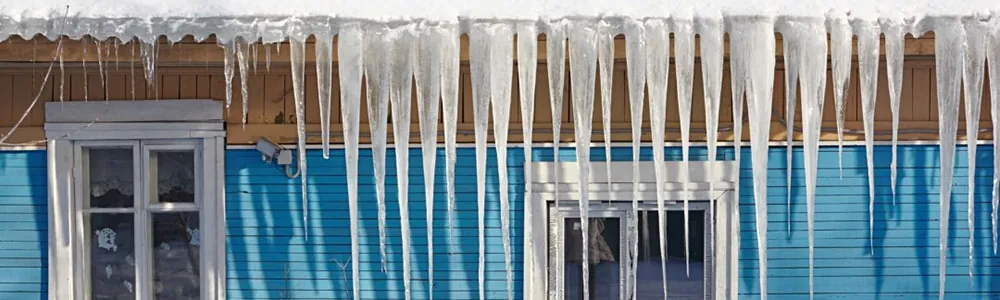
If you're reading this with a thick ridge of ice along your roof edge and a row of icicles that keeps getting longer, take a breath. Most ice dams can be dealt with before they do real harm. The trick is knowing which steps actually help, which ones make things worse, and when it's time to hand the job to someone with the right equipment.
West Michigan is built for ice dams. Grand Rapids now averages about 77 inches of snow a winter, and lakeshore towns from Holland to Muskegon often see more. Add the January stretches where the thermometer bounces between the teens and the low thirties, and you have exactly the freeze-and-thaw cycle that builds ice at the eaves. If you have one this winter, you're in good company.
What an ice dam is actually doing to your roof
An ice dam is a wall of ice that forms at the lowest edge of your roof. Snow higher up melts because heat from your living space is warming the roof deck. That water runs down until it reaches the overhang, which sits outside the warm part of the house, and it freezes again. Day after day, the ridge grows.
The ice itself isn't the main problem. The water trapped behind it is. Shingles are made to shed water running downhill, not to hold back a pond. When meltwater pools behind the dam, it can creep up under the shingles, past the underlayment, and into the roof deck, the insulation, and eventually your ceilings and walls.
We've written a separate article on why ice dams form and whether your gutters are to blame. This one is about what to do once you already have one.
First: figure out how urgent this is
Not every ice dam is an emergency. Walk through the house before you do anything else.
It can probably wait a few days if:
- You see ice and icicles at the eaves, but no water inside.
- Ceilings, the tops of exterior walls, and window trim near the dam are dry.
- The attic, if you can safely look, shows no wet insulation or dripping.
Call a roofer right away if:
- Water is dripping from a ceiling, light fixture, or window frame.
- You see new stains, bubbling paint, or sagging drywall.
- Ice has pulled a gutter away from the fascia or is bending it down.
- Icicles are hanging over a doorway, walkway, or driveway where people walk.
If water is coming in, put down towels and buckets, move furniture and electronics out of the way, and take photos. If you can reach the attic safely, look for the wet spot and set a container under any drip. Turning off power to a light fixture that's dripping is a smart precaution.
What NOT to do (this is where most damage happens)
Every winter, we see roofs that came through the ice dam fine and were damaged by the effort to remove it. Please skip these:
Don't chip or hammer the ice. It's frozen to the shingles. Swinging a hatchet, ice pick, or hammer at it breaks shingle edges, cracks the granule surface, and can puncture the underlayment you're trying to protect. One afternoon of chopping can mean a roof repair in spring.
Don't use rock salt. Sodium chloride can damage shingles and metal flashing, and the runoff is hard on plants, siding, and concrete.
Don't use a pressure washer or a torch. High-pressure water forces its way under shingles, which is the exact problem you're trying to solve. Open flame on a roof is dangerous, period.
Don't climb onto a snowy roof. A roof covered in snow and ice is one of the most dangerous surfaces around a home. Ladders on frozen ground slip, too. No ice dam is worth a fall.
Don't stand under icicles while knocking them down. Big ones are heavy and sharp, and they can take gutter sections down with them.
What you can safely do from the ground
These steps won't remove a big ice dam, but they slow it down and buy you time.
Rake the bottom few feet of snow. A long-handled roof rake used from the ground lets you pull snow off the first three or four feet above the eaves. That takes away the supply of snow that feeds the dam. Work slowly, pull straight down the slope, and stop if the rake is scraping the shingles hard. You only need to thin the snow. You don't need to scrape to bare roof.
Make a calcium chloride channel. Fill the leg of an old nylon stocking with calcium chloride ice melt (not rock salt), tie it off, and lay it across the dam so it runs from the ice up toward the roof. It slowly melts a channel the trapped water can drain through. If you can't place it safely from the ground or a stable spot, skip this step. Cover plants below with a tarp.
Keep downspouts open. Clear snow and ice away from the downspout outlets at ground level so water that does get through has somewhere to go.
Reduce heat getting into the attic. If an attic hatch is uninsulated, or recessed lights in the top-floor ceiling are warm to the touch, that heat is helping melt the snow. A temporary fix like weatherstripping the hatch can help until the real problem gets solved.
When it's a job for a roofer
Call in a professional when the dam is thick, when water is getting inside, when it's over a second story, or when you simply aren't comfortable on a ladder in winter. That last one is reason enough.
If you have an ice dam problem, give Above Roofing a call. We help homeowners across West Michigan from four offices in Grand Rapids, Jenison, Holland, and Rockford. We'll also check what the ice may have already done, like lifted shingles, bent drip edge, gutters pulling loose, or wet decking. And we treat a winter call the same way we treat any other: we'll tell you what we found, what needs attention now, and what can wait until the weather turns.
After the thaw: what to check
Once the ice is gone, it's worth looking for damage that may not show up right away.
- Ceilings and walls: Look for faint brown rings or soft spots on ceilings near exterior walls, especially upstairs.
- Attic insulation: Insulation that got wet can stay damp and lose much of its value. Packed-down or stained areas are a red flag.
- Gutters: Check that gutters are still pitched toward the downspouts and that the hangers haven't pulled loose from the fascia.
- Shingles at the eaves: Look from the ground for lifted, cracked, or missing shingles along the bottom edge.
If you aren't sure what you're looking at, a free roof inspection will tell you. Also check your homeowners policy. Many policies treat sudden interior water damage differently from wear and tear, so your agent is the right person to ask what's covered.
How to keep it from happening again
An ice dam is a symptom. The cause is usually under the roof, not on it.
Attic insulation: Too little insulation lets living-space heat warm the roof deck. Adding insulation is often the single biggest fix.
Air sealing: Gaps around attic hatches, bath fans, plumbing stacks, and recessed lights leak warm, moist air into the attic. Sealing them matters as much as insulation. Our article on recessed lights and house fans that leak heat walks through the common culprits.
Ventilation: A balanced soffit-to-ridge system keeps the attic close to the outdoor temperature, so snow melts evenly instead of refreezing at the edge. Here's why attic ventilation matters.
Ice and water protection at the eaves: When a roof is replaced, building code in cold climates like ours calls for an ice barrier membrane along the eaves that extends inside the heated wall line. It won't stop an ice dam from forming, but it gives backed-up water a much harder time getting into the house. If your roof is older, it may not have one.
If you see frost or dripping in your attic on cold mornings, that may not be an ice dam at all. Here's how to tell attic frost and condensation apart from a roof leak.
Dealing with an ice dam right now?
You don't have to figure this out from a ladder. Call Above Roofing at 616.662.7663 and tell us what you're seeing. We're a family-owned West Michigan roofer, here since 1996, and we're available for storm and emergency repairs. If there's no water coming in yet, we'll help you decide whether it needs attention today. When spring comes, we'll look at the roof, attic, and ventilation together, so you're not fighting the same ice next winter.
FAQs
Is an ice dam an emergency?
Only if water is getting inside, a gutter is pulling loose, or large icicles hang over a walkway. Otherwise it can usually wait a few days.
Can I chip ice off my roof?
No. Chipping breaks shingles and can puncture the underlayment beneath them.
Is rock salt safe on a roof?
No. Use calcium chloride in a nylon stocking instead, and only if you can place it safely.
Who should I call if I have an ice dam problem?
Call Above Roofing at 616.662.7663. We help homeowners across West Michigan and will tell you what needs attention now and what can wait.
How do I stop ice dams from coming back?
Fix the attic: more insulation, air sealing, and balanced ventilation.