
Best Roofer for Storm Damage Insurance Claims in Grand Rapids

A good storm roofer should document, explain, and meet deadlines.
That sentence is simple, but it's also the cleanest test there is for choosing a roofer for an insurance claim in Grand Rapids. The roofers who do those three things consistently are the ones who make storm-damage claims go smoothly. The roofers who don't are the ones whose customers end up with delayed claims, denied coverage, lawsuits, or roofs that need to be redone within a few years.
Choosing the right roofing company for insurance claims is one of the most consequential decisions a homeowner makes after a storm. It affects the claim outcome, the quality of the repair, the warranty that follows the work, and whether the experience ends with relief or regret. This guide walks through the criteria that matter, the red flags that should send you elsewhere, and what to expect from a roofer who knows how to handle a storm damage claim well.
Why the choice of roofer matters more for storm claims than for regular work
A standard re-roofing job is mostly a question of installation quality. Did the crew do good work, with quality materials, on time, at a fair price? Important questions, but relatively bounded.
A storm damage roofing job adds three additional dimensions on top of installation quality:
The roofer's documentation determines how the claim is built. The damage findings, the photographs, the slope-by-slope notes; these are the evidence base your insurance adjuster works from. A roofer who documents poorly hands you a weaker claim. A roofer who documents thoroughly hands you a stronger one.
The roofer's communication with the adjuster shapes the approved scope. Many adjusters welcome having the roofing contractor present during their visit so they can walk the roof together. A roofer who can speak the adjuster's language, point to specific damage, explain technical findings, and clarify edge cases often helps the adjuster approve the right scope the first time. A roofer who can't or won't do this leaves the homeowner to translate.
The roofer's deadline discipline keeps the claim from stalling. Insurance claims have timelines. Adjuster visits, supplemental claims, scope agreements, and final invoicing all happen on schedules that require timely action from the contractor. A roofer who misses deadlines slows the claim and sometimes loses the homeowner money.
Each of those three is a separate skill, and not every good roofer has all three. The roofers who do are the ones worth choosing for an insurance claim job.
The criteria that actually matter
Below are the criteria that distinguish a strong storm damage roofer from a weak one. Use them in any conversation with a contractor you're evaluating.
1. Local presence with a verifiable business address
The most important single criterion. A roofer with a real, verifiable address in or near Grand Rapids has accountability that an out-of-area company doesn't. They live in the community, they depend on local reputation, and they're still around two years from now if a warranty issue comes up.
Ask for the business address. Look it up. Drive past it if you want. Confirm the company has a Michigan business registration and a Grand Rapids or West Michigan operational footprint. A company that operates out of a P.O. box, a hotel parking lot, or a different state should be treated with caution.
2. Written documentation as a standard part of the job
A reputable roofer doing storm damage work provides written documentation as a baseline. That means:
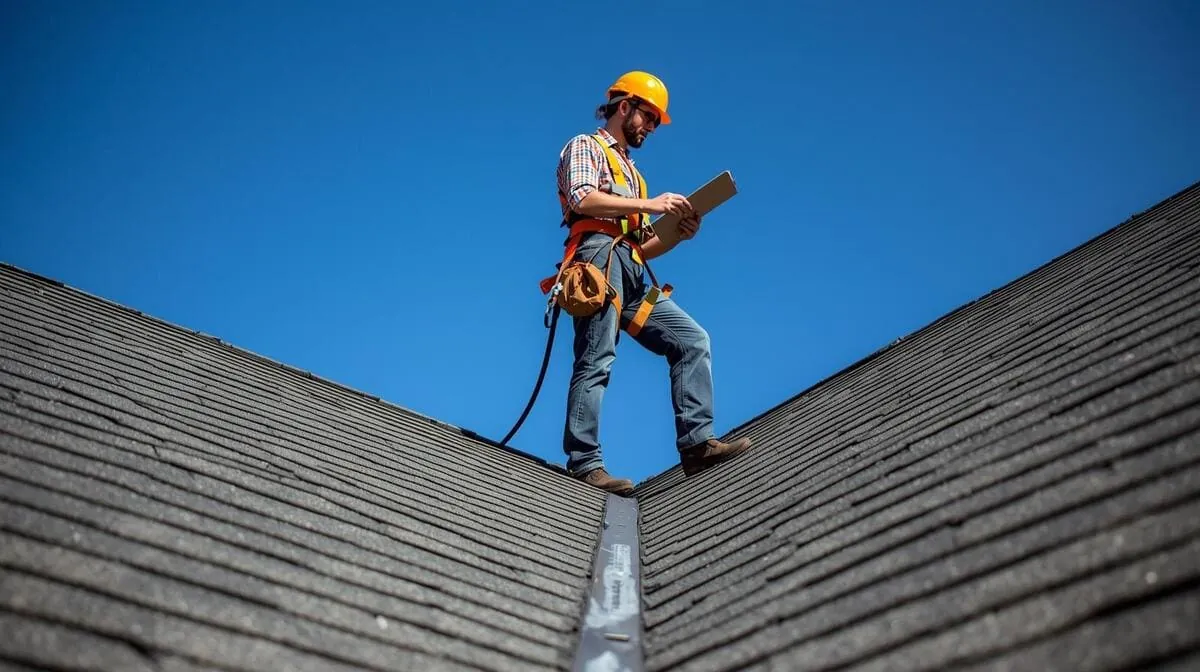
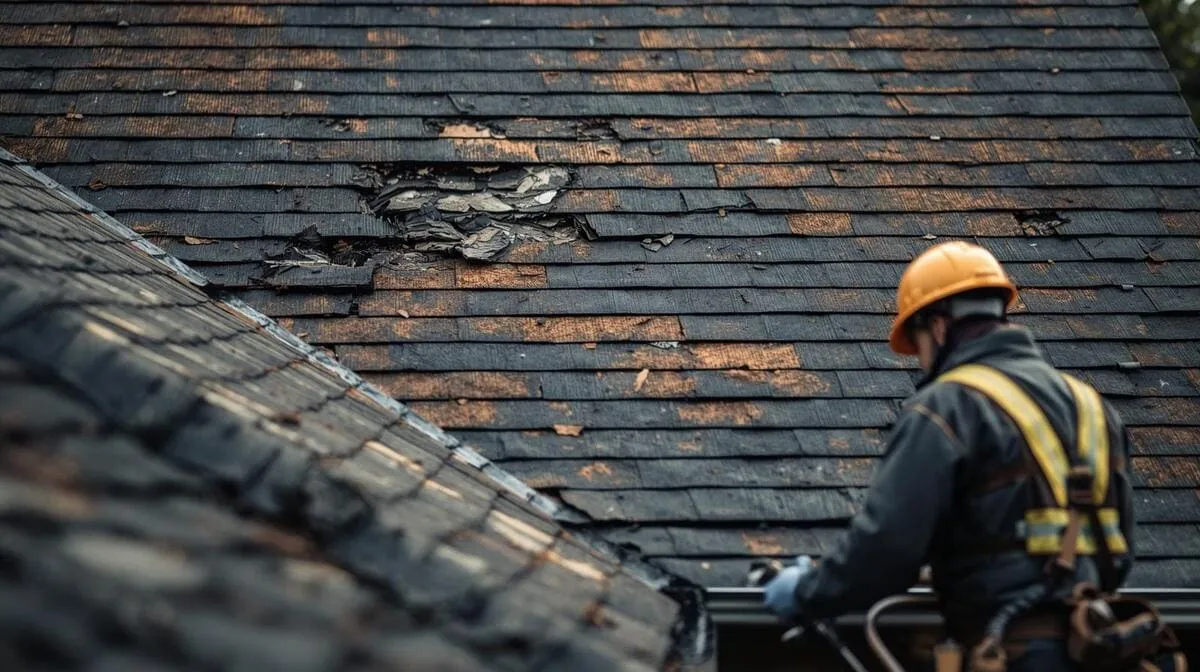
A written inspection report with photographs covering each slope of the roof, the flashing, the gutters, and the attic underside where accessible.
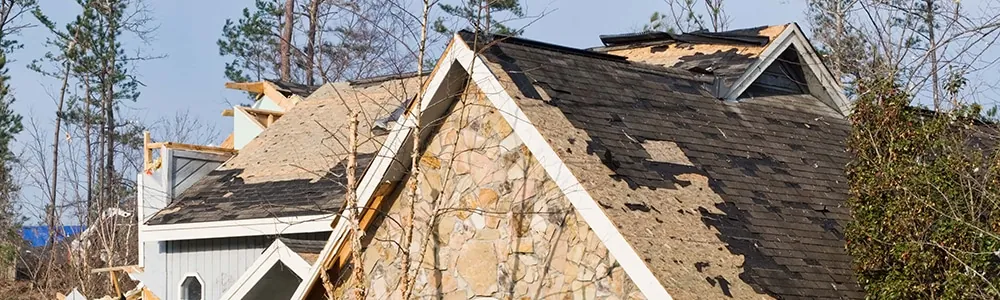
A clear distinction between storm damage and pre-existing wear, called out item by item.
A written scope of work for the repair, with materials and labor described in enough detail that you can compare it to any other estimate.
A written warranty document that names the warrantor, the duration, and what is and isn't covered.
If any of these are missing or "we'll get you that later," that's a sign the company doesn't run on documentation. For insurance claim work, that's disqualifying.
3. Willingness to be present for the adjuster's visit
This is one of the strongest indicators of a roofer who knows how to handle claims. Ask directly: Will someone from your company be on-site when the insurance adjuster comes out to inspect?
A good answer is yes, with a name and a confirmation that they'll walk the roof with the adjuster. A vague answer or an excuse — "the adjuster won't allow it," "we don't do that anymore," "the homeowner handles that part" — is a warning sign. Adjusters routinely welcome contractor presence on-site. A roofer who avoids it either doesn't know what they're doing or doesn't want to be present for the technical conversation.
4. Honest assessment without pressure to claim
Watch how a contractor talks about your roof during the initial inspection. Are they walking you through what they actually found, including the parts that aren't claim-worthy? Or are they pushing every observation into the "definitely storm damage" category?
The best storm damage roofers in Grand Rapids will tell you when something is real damage worth filing for, and they'll tell you just as clearly when something is wear, age, or cosmetic. They make their assessment first and let you decide what to do with it. They don't lead with "we'll get you a new roof on insurance" before they've even climbed up there.
5. References, reviews, and verifiable history in the area
A roofer who has done storm damage work in Grand Rapids should have references, reviews, and a history of completed jobs in the area. Look at recent Google reviews, Better Business Bureau records, and any state contractor lookup tools. Ask the contractor directly: Can you give me three references from storm damage jobs in the past year in this area?
A legitimate contractor produces those references quickly. A storm chaser doesn't have them.
6. Proof of insurance and licensing
A reputable roofer carries general liability insurance and workers' compensation, and they'll provide proof on request. Ask for a certificate of insurance. Verify it's current. This protects you from liability if anyone is injured on your property during the work.
State licensing requirements vary, but a roofer working in Michigan should be properly registered. If the company is reluctant to provide insurance or licensing details, end the conversation.
7. Clear, no-pressure contract terms
The contract you sign with a roofer should match the conversation you had with them. Read it carefully before signing.
Watch for:
An "assignment of benefits" clause that gives the roofer authority to negotiate directly with your insurance company. Some legitimate contractors use these. Many bad actors abuse them. If you sign one, you may lose the ability to control the claim outcome yourself.
Vague material specifications, missing warranty details, or undisclosed fees.
A reputable contractor explains the contract terms in plain language and gives you time to review before signing. A pressured signing is a warning sign on its own.
The red flags that should end the conversation
If any of the following come up during your interaction with a storm damage roofer, walk away.
A door-knocker shows up unsolicited the day after the storm and pushes for an immediate inspection. Some legitimate contractors do canvassing in storm zones, but the high-pressure version of this is the single biggest pattern of storm-chaser activity.
The contractor offers to "waive" your deductible, pay your deductible for you, or otherwise reduce your out-of-pocket cost. This is illegal in many states and is a strong indicator of insurance fraud activity.
The contractor promises specific outcomes from your insurance company: guaranteed approval, "we'll get you a new roof," guaranteed full replacement. Roofers cannot guarantee insurance outcomes, and anyone promising them is being dishonest about how claims work.
The contractor pressures you to sign anything before you've had time to think: an inspection contract, an assignment of benefits, a repair agreement.
The contractor's only contact information is a cell phone number, a magnetic truck sign, or a temporary email address. No website, no business address, no permanent footprint.
The contractor refuses to provide written documentation, photos, or a clear written scope of work.
The contractor disparages other local roofers aggressively, especially without specifics. A confident contractor lets their work speak for itself.
Any of these is enough to disqualify. A combination of two or more is a clear signal to go elsewhere.
How a good storm damage claim experience actually goes
Here's what the experience looks like when you've chosen the right roofer for an insurance claim in Grand Rapids.
You call the roofer after suspecting storm damage. They schedule a free inspection within a few business days, faster if you have an active leak. The inspector arrives in branded clothing and a marked vehicle. They walk the roof, the attic, the gutters, and the surrounding property. They document everything in writing with photographs. They walk you through their findings in plain language and make a clear recommendation: this damage rises to the level of an insurance claim, this doesn't, and here's why.
If you decide to file, they give you the inspection report to submit with your claim. When the insurance adjuster schedules a visit, the roofer is there to walk the roof with them. The conversation between the contractor and the adjuster is technical, specific, and based on shared evidence. The approved scope reflects the actual damage.
The roofer provides a clear written contract for the work, with materials, warranty, and timeline spelled out. The work begins on schedule, is completed on schedule, and is documented with photos for your records. Final paperwork is filed with the insurance company on time, and the final invoice matches the agreed-upon scope.
You end up with a properly repaired roof, a clean claim file, and a roofer you'd call again.
Why local matters even more for storm claims
Out-of-area contractors who descend on Grand Rapids neighborhoods after major storms are sometimes legitimate operators. Most aren't. Even the legitimate ones disappear when the local storm window closes, leaving warranty issues, follow-up problems, and unfinished punch lists for the homeowner.
A local roofer with a permanent Grand Rapids presence is still here next year. If a warranty issue comes up, you know where to find them. If your roof needs minor service down the road, you have an established relationship. If you have neighbors with similar storm damage, you can compare notes about the same company.
Local roofers also know the local insurance landscape — which adjusters operate in the area, what carriers are common, what claims patterns look like for West Michigan storms. That experience makes the claim process smoother.
Choose Above Roofing for inspection and claim navigation
Above Roofing is a local Grand Rapids roofing company with a documented history of storm damage work across West Michigan, including Wyoming, Kentwood, Grandville, Walker, Rockford, Ada, Cascade, Belmont, Comstock Park, and Sparta.
We provide free, written storm damage inspections, can be present during your adjuster's visit, document every step of the process, and stand behind our work with clear warranties. We tell you what we find without pressuring you toward a claim, and we work on the timeline the claim requires.
If you're evaluating roofers for a storm damage insurance claim, request a free inspection and see how we operate. We're happy to be one of the contractors you compare — and we expect you to compare us.
For more on the broader storm response and claim documentation process, visit our Storm and Hail Damage Roof Repair page and our roof insurance claim article.