
Wind Damage Roof Repair in Grand Rapids: Signs to Watch For
Hail gets the attention, but wind often causes the roof leak.
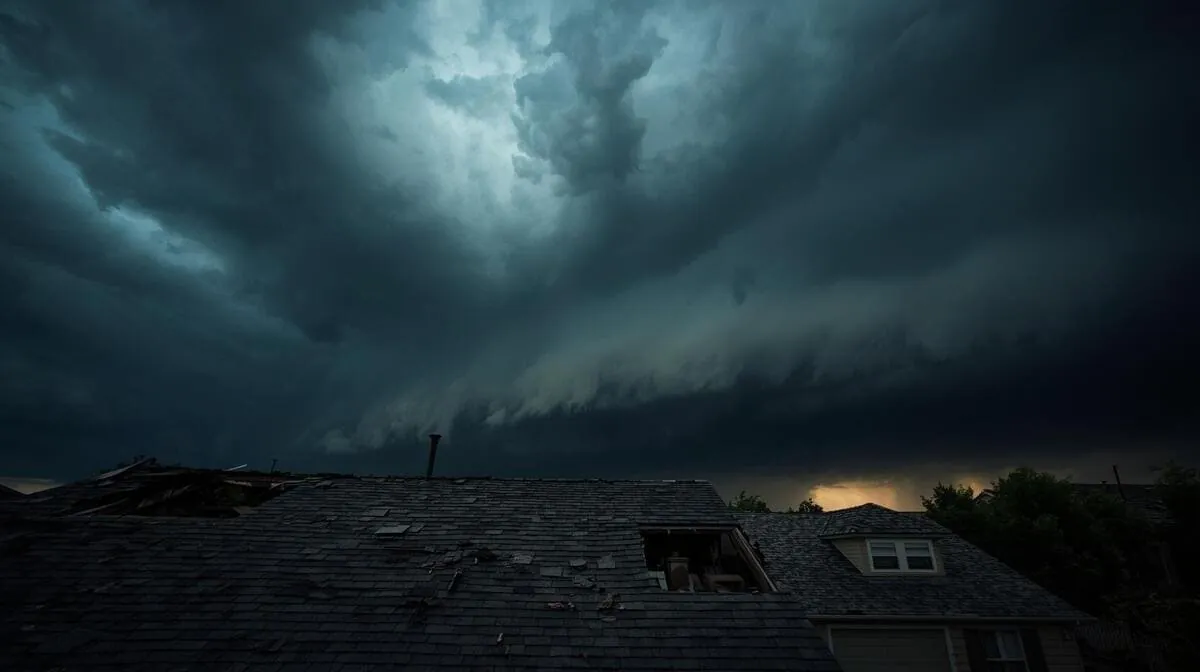
When severe weather hits West Michigan, hail is the part that makes the news. People hear the dings on their cars, they see the chunks of ice on the lawn, and they think to call a roofer. Wind, by contrast, passes through quietly from a homeowner's perspective: branches sway, things rattle, and the storm moves on. The damage it leaves behind is harder to see, often invisible from the ground, and almost always less dramatic on initial inspection than hail.
That's exactly why wind is the more common cause of preventable roof leaks. The damage is real, but it doesn't announce itself. Homeowners skip the inspection because the roof "looks fine," and then six months later a slow ceiling stain shows up after a normal rain. The leak path was set the day of the windstorm; it just took time to find its way to the drywall.
If a significant windstorm has passed through Grand Rapids recently, or you suspect a previous one might have affected your roof, this guide walks through the signs of wind damage to watch for, why high wind causes the kind of damage it does, and what wind damage roof repair in Grand Rapids actually involves.
Why wind is harder on a roof than people think
A roof system is designed to handle weather, but the design is engineered against typical wind loads, not exceptional ones. Recent severe weather across Kent County and surrounding areas has included gust reports of 60 to 80 miles per hour. At those speeds, several things happen to a shingle roof that wouldn't happen at typical wind levels.
Wind doesn't push down on the roof: it lifts. As gusts move across the slope, they create lower pressure on the upper surface of the shingles, which produces upward suction. This is the same principle that creates lift on an airplane wing. On a roof, that suction tries to pull shingles up away from the deck.
The factory-applied adhesive strips on each shingle are what hold them down against this lifting force. In a typical wind event, those seals hold. In a severe wind event, they can break: even when the shingle itself stays in place.
Once the seal is broken, every subsequent rain has an easier path under the shingle. Water can run beneath the surface layer, find the underlayment, and eventually reach the deck or interior. The leak path opens on storm day. The leak shows up later.
This is the central thing to understand about wind damage: the worst version of it doesn't always look like missing shingles. It looks like a perfectly normal roof with broken seals you can't see from the ground.
The visible signs of wind damage on a roof
Some wind damage announces itself clearly. Look for these signs after any significant high-wind event in Grand Rapids.
Missing shingles or shingle pieces.
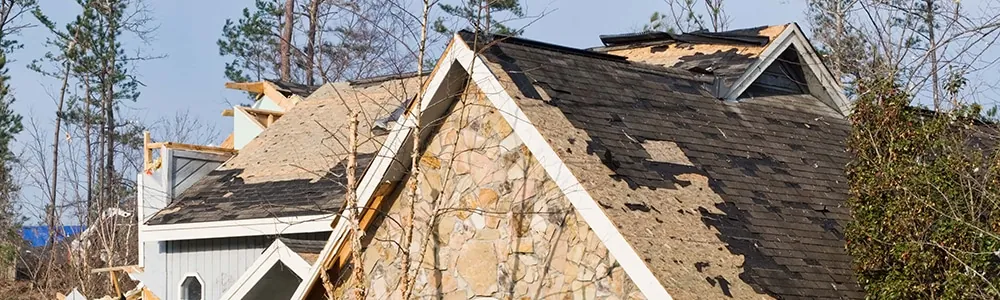
Look at the roof from the ground and look around the yard. Even a few shingle fragments on the lawn confirm wind lift was strong enough to overcome the adhesive seal somewhere.
Lifted or curling shingle edges and corners.
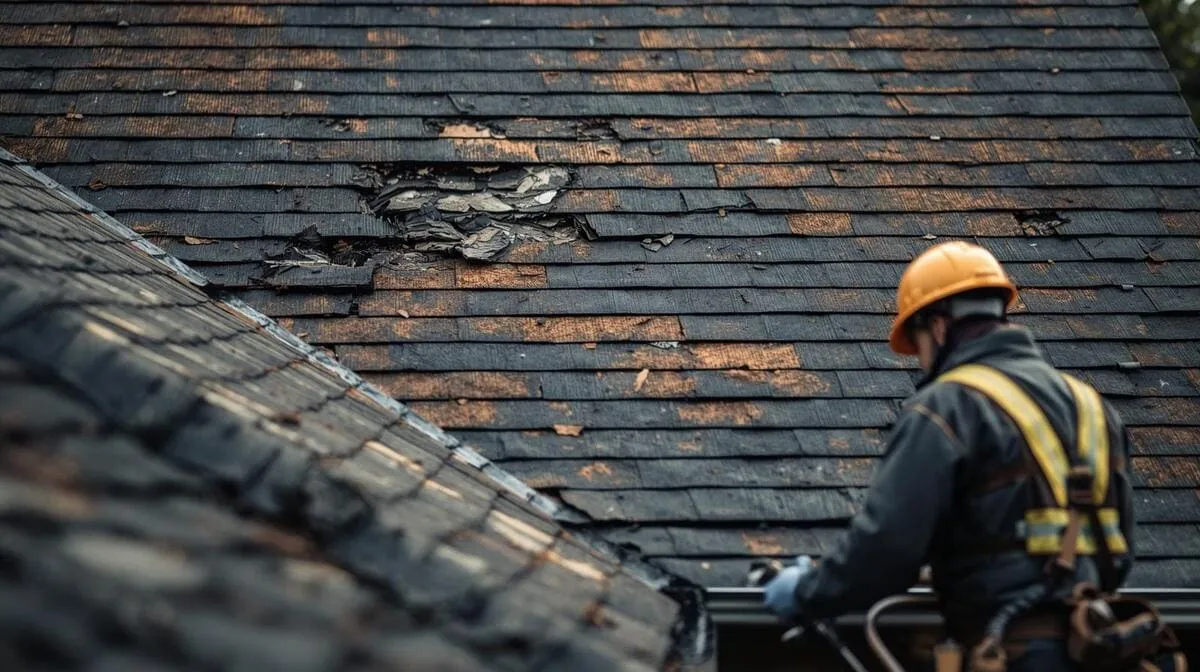
Shingles that look like they're peeling up from the surface, especially along the leading edges of a slope or near the ridge, indicate the seal was compromised. This can sometimes be seen from the ground on lower-slope or single-story roofs.
Creased shingles.
When wind lifts a shingle hard enough to bend the asphalt mat but not hard enough to remove it, the shingle falls back into place with a horizontal crease across it. From distance the shingle looks intact. Up close, the crease is visible and the mat is fractured. A creased shingle is functionally compromised even though it's still on the roof.
Damaged or displaced flashing.
Flashing around chimneys, vents, skylights, and roof-to-wall transitions is often the first thing wind tugs at. Look for lifted edges, separated joints, or any visible gap between flashing and the surrounding surface.
Damaged ridge or hip cap shingles.
The cap shingles that run along the peak and edges of the roof are especially exposed to wind. Missing, cracked, or displaced caps are a strong indicator that the wind was severe enough at roof height to do real damage.
Damaged vents and roof penetrations.
Box vents, ridge vents, turbines, and pipe boots can all be damaged by high winds. Look for tilted vents, missing pieces, or visible breakage.
Detached or sagging gutters and downspouts.
Wind can pull gutter sections away from the fascia or tear downspouts loose from their attachments. Visible gutter damage usually means the surrounding roof edge took significant wind force.
Debris on the roof.
Branches, leaves piled in unusual amounts, or other yard debris on the roof indicate the wind moved material around with enough force to threaten the roof system.
These are the signs you might catch from a careful ground-level walk-around. But they're only part of the story.
The invisible signs that matter just as much
This is where wind damage becomes diagnostically different from hail damage. Several conditions that significantly compromise a roof are not visible from the ground or even from a casual roof glance.
Broken adhesive seals.
As described above, wind can break the seal bond on shingles without lifting them out of place. A roofer detects this by gently lifting a shingle and feeling whether the bond is intact. This is one of the most common forms of high-wind damage and one of the most missed.
Underlayment exposure under apparently intact shingles.
When shingles are temporarily lifted by wind, water can wet the underlayment beneath. If the underlayment is older or already compromised, that wetting can begin the leak path even if the shingle is back in place by the time the storm passes.
Loosened nails.
Wind that flexes shingles can also work fasteners loose over time. A nail that's no longer fully seated may still hold the shingle but no longer holds it firmly.
Compromised flashing seals.
The caulking and sealant around flashing, vents, and penetrations can be loosened by wind even when the flashing metal itself doesn't move visibly. This is a frequent cause of slow leaks that show up months after the storm.
Damage to the attic underside.
Wind-driven rain can push water into vent openings or under lifted shingles in volumes that aren't always visible from the exterior. Inside the attic, that shows up as fresh water staining on the underside of decking, wet insulation, or dampness around vent boots.
A proper wind damage inspection looks for all of these; not just the visible signs.
The wind speeds that matter
Asphalt shingle manufacturers rate their products for wind resistance, typically in ranges like 60 mph, 110 mph, or 130 mph depending on the shingle line. Most standard architectural shingles installed on Grand Rapids homes carry ratings in the 110 mph range when installed correctly with proper fastening.
But those ratings are best-case scenarios. In practice, several factors reduce a roof's actual wind tolerance:
- The age of the shingles and the condition of the adhesive seals
- Whether the shingles were installed with the correct nail count and placement
- Whether the existing roof has had prior repairs or partial replacements that affect uniformity
- The slope's exposure to prevailing wind direction
- The condition of the underlying decking and the strength of fastener hold
This is why a gust report of 60 to 80 mph in Kent County can produce real damage even on a roof rated higher. The rating describes ideal conditions; weather doesn't always cooperate with ideal conditions.
If a wind event in your area produced sustained winds above 50 mph or gusts above 60 mph, a roof inspection is appropriate even if you don't see obvious damage from the ground.
What wind damage roof repair in Grand Rapids actually involves
The scope of a wind damage repair depends entirely on what the inspection finds. The most common scenarios:
Localized repair.
A small area of missing or creased shingles, intact surrounding roof, and no widespread seal failure. The roofer matches shingles, replaces the damaged pieces, re-seals adjacent shingles as needed, and confirms the underlayment is sound. Typically a half-day to one-day job.
Section repair.
A larger area of damage on one slope or edge, often involving multiple courses of shingles, possibly damaged flashing, and broken seals over a wider footprint. Usually a one- to two-day job and may include some underlayment repair if exposure was prolonged.
Slope replacement.
When one slope took disproportionate damage, for example, the slope that faced a particularly strong gust direction, replacement of that one slope is sometimes the right call, especially if the existing shingles are older and the damage is widespread on that side only.
Full replacement.
When the roof was already at the end of its service life and the windstorm caused damage across multiple slopes, a full replacement may become the most cost-effective path. This is less common than the partial scenarios but is a real outcome when the roof was already aging when the wind hit.
A good local roofer walks you through which of these your roof actually needs, with the inspection findings backing up the recommendation. They don't push toward full replacement when a repair will do the job, and they don't recommend a small patch when the actual scope is larger.
What to do after a high-wind event
Even if your roof looks fine, a few practical steps after any significant windstorm in Grand Rapids protect you against the delayed leak scenario.
Walk the property and look for any signs from the ground; shingles or pieces in the yard, lifted edges visible from the lawn, debris on the roof, damaged gutters, dimpled or displaced metal items. Take date-stamped photos of anything you notice, and save weather alerts on your phone showing the storm date and severity.
Check the attic if access is safe. Look for any fresh moisture on decking, insulation, or framing. Wind-driven rain can leave evidence inside even when the exterior looks normal.
Schedule a documented inspection if any of the visible signs are present, if there's any sign of damage in the attic, or if local weather reports confirmed sustained winds above 50 mph or gusts above 60 mph in your area.
Don't climb the roof yourself. Lifted shingles and broken seals create hazards that aren't visible until a foot lands on them. The inspection is free and the answer is the same.
Schedule a storm damage inspection
Above Roofing provides documented storm damage inspections across Grand Rapids and the surrounding West Michigan communities, including Wyoming, Kentwood, Grandville, Walker, Rockford, Ada, Cascade, Belmont, Comstock Park, and Sparta.
Each inspection includes a full walk of the roof, hands-on checks of shingle seals and flashing, an attic underside assessment when accessible, and a written report with photos. We separate wind damage from pre-existing wear, identify damage you can't see from the ground, and recommend a scope of work that actually matches what we found; not what would generate the biggest job.
If a recent windstorm passed through your area, schedule a free inspection rather than waiting for a leak. The damage is often there before it's visible inside the home.
For more on the broader storm response, claims documentation, and emergency response, visit our Storm and Hail Damage Roof Repair page.