
Free Roof Inspection After a Hail Storm: What's Included?

Here's what we check before recommending repair or replacement.
A free roof inspection after a hail storm should not be a five-minute walk and a sales pitch. It should be a thorough, documented look at the entire roof system, the surrounding evidence of the storm, and the inside of the home where damage often shows up before it does anywhere else. The deliverable should be a written report with photos that you can read, save, and use, whether you decide to file an insurance claim, pay out of pocket, or do nothing at all.
If you're searching for a free roof inspection in Grand Rapids after a hail storm and wondering what you actually get, what we look for, and whether the "free" really is free, this guide answers all of it. By the end, you'll know exactly what to expect when a reputable local roofer comes out.
What a free hail inspection actually covers
A proper roof inspection after a storm covers six distinct areas. Each one tells a different part of the story, and a thorough inspection won't skip any of them.
1. The full roof field, slope by slope
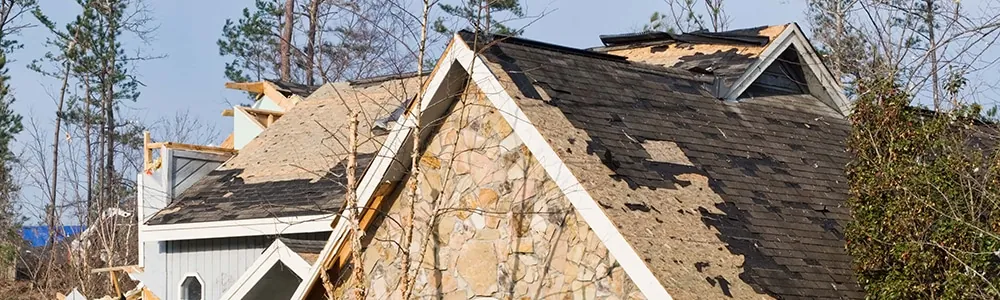
The main visual area of the roof, the shingles themselves, gets walked and assessed slope by slope, not just from the most accessible angle. Each slope is checked for:
- Dark circular impact marks where granules have been knocked free by hailstones
- Soft or bruised spots in the asphalt mat (detected by gentle pressure, not photos)
- Granule loss, especially anything concentrated rather than uniform
- Cracking, splitting, or lifting shingles
- Missing or displaced shingles from wind
- Direction-based damage patterns that align with the storm path
The roofer also notes which slopes face which direction, because that determines which sides faced the storm and where damage should logically concentrate. A slope that took quarter-size hail on its west-facing side should look different from a sheltered east-facing slope.
2. Flashing, penetrations, and roof features
Flashing: the metal that seals the joints between the roof and chimneys, vents, skylights, pipe boots, and dormers. These can cause more leaks than shingle damage does. A proper inspection looks at every penetration point for:
- Dented, lifted, or pulled-away flashing
- Cracked or deteriorated pipe boot collars
- Damaged or missing chimney counter-flashing
- Compromised seals around skylights and vents
- Hail dimples on chimney caps and metal vent covers
Hail and wind hit these features especially hard because they sit higher than the surrounding roof and have more exposed metal surface. Damage here is often the first cause of leaks following a storm.
3. Gutters, downspouts, and drainage
The gutter system is where evidence of hail impact often shows up most clearly. The inspector checks for:
- Dents and dimpling on gutter exteriors (a primary indicator of hail force)
- Granule accumulation in gutter outlets or at the base of downspouts
- Loose, pulled-away, or damaged gutter sections
- Bent or detached downspouts
- Damaged splash blocks and drip edge
Heavy granule buildup at downspouts after a recent storm is not normal aging — it's evidence that the storm pulled material off the roof, even if the shingles look mostly intact from above.
4. Soffit, fascia, and roof edge
The edges of the roof — where the roof line meets the walls — are vulnerable to wind damage and to water infiltration when shingles have been compromised. The inspection includes:
- Soffit panels for damage, displacement, or water staining
- Fascia boards for paint failure, rot, or impact damage
- Drip edge integrity along the perimeter
- Eaves and overhangs for visible water marks
5. Attic underside and ventilation
Whenever access is safe and available, a thorough inspection includes the attic. This is the part most homeowners don't realize is included, and it's often the most diagnostic. From inside the attic, the inspector can check for:
- Active or recent water staining on the underside of the roof decking
- Wet or compacted insulation
- Daylight visible through the roof in any unintended location
- Damaged or compromised rafters
- Signs of poor ventilation that may have accelerated existing wear
Roof damage often shows up in the attic before it shows up on the ceiling below. Catching it here means catching it early.
6. Surrounding property evidence
Finally, the inspection looks at the rest of the property for ground-level evidence that the storm hit hard enough to cause real damage. This includes:
- Dents on AC condenser fins, garage doors, mailboxes, and vehicles
- Hail dings on siding
- Bent or damaged window screens
- Fallen branches, defoliated trees, and other yard debris
This evidence is important because it confirms the storm's intensity and direction at your specific address. An adjuster reviewing a claim later finds it useful to see the storm-impact picture as a whole, not just the roof in isolation.
What you receive after the inspection
The end product of a proper free hail inspection is a written report. Not a verbal summary in your driveway. Not a contractor who says "yeah, you've got some hail damage, sign here." A documented report.
A complete inspection report typically includes:
- The date, address, and roof age (if known)
- A summary of observed conditions, slope by slope
- Photographs of any damage found, with clear labels indicating location and type
- A clear distinction between storm-related damage and pre-existing wear
- Notes on flashing, penetrations, gutters, and ventilation
- Recommended next steps, including whether the damage rises to the level of an insurance claim, a localized repair, or no action
That report is yours. You can save it, share it with your insurance company, get a second opinion from another roofer, or hold onto it as a baseline record of your roof's condition. There is no commitment attached to receiving it.
Is the inspection actually free, with no obligation?
This is the question almost every homeowner has and is too polite to ask out loud.
The honest answer: yes, a reputable Grand Rapids roofer offers free roof inspections with no obligation because it is genuinely good for both sides of the transaction. The homeowner gets clear, documented information about their roof. The roofer gets a chance to demonstrate honest work and earn the business if and when repairs are needed. If the damage is real and the homeowner chooses to move forward, the inspection has built a relationship. If the damage is not significant or the homeowner decides not to file or repair, the roofer has still done a job well and may earn that homeowner's business, or a referral later.
What "free with no obligation" should mean in practice:
- No charge for the visit, the inspection itself, or the written report
- No contract is required before, during, or after the inspection
- No pressure to file an insurance claim
- No requirement to use the inspecting roofer for any subsequent work
- No upselling for unrelated services
If a contractor offers a "free" inspection but requires you to sign a contract or an "assignment of benefits" form before they'll do the work, that is not a free inspection. That is a sales contract dressed up as one. Walk away.
How a free hail inspection in Grand Rapids typically goes
A typical free roof inspection after a hail storm in Grand Rapids unfolds in roughly the same way each time.
You call, send a quick message, or fill out a form to request the inspection. A short conversation establishes the address, the date of the storm if known, and any concerns you've already noticed: leaks, dents, granules in the gutters, suspicious-looking ceiling spots.
An inspector arrives at a scheduled time, usually wearing branded clothing and arriving in a marked vehicle. They introduce themselves, walk the perimeter of the home with you if you want to be involved, and point out any ground-level evidence of storm impact. They then inspect the roof itself, either by ladder access from the perimeter or from the roof surface where safe, and check the flashing, penetrations, and gutter system. You should also note that it is more difficult to inspect a roof for hail damage after a rain or if the roof is wet.
If accessible, they walk through the attic to assess the underside of the roof. They take photographs throughout, document conditions in writing, and put the report together either on-site or shortly after.
The visit usually wraps up with a walk-through of what they found. This is the part that matters most. A good inspector explains the findings in plain language, separates real damage from cosmetic or aging conditions, and gives you their professional recommendation without pressuring you toward a particular decision. You leave the conversation knowing more about your roof than when it started, and with a written record to back it up.
Total elapsed time: usually 45 minutes to 90 minutes, depending on roof size and complexity.
Red flags that mean the "free inspection" isn't really one
A few things you should not see during a free roof inspection after a hail storm in Grand Rapids. Any of them means it's time to politely end the visit.
The inspector goes onto the roof for 90 seconds and comes down with a definitive "your roof is destroyed, you need a full replacement." Real damage assessment takes longer than that.
You're handed a contract before the inspection is even complete and asked to sign so they can "start the insurance process for you." Reputable roofers do not need a signed contract to provide an inspection report. Sign-on-the-spot pressure is the single biggest warning sign of a storm chaser.
The inspector won't put findings in writing or refuses to give you a copy of the photos. A trustworthy inspection produces documentation. No documentation, no inspection.
The inspector promises specific things about your insurance, guaranteed approval, "we'll get you a free roof," and waived deductibles. Roofers cannot guarantee coverage outcomes, and waived deductibles are illegal in many states. Anyone making those promises is being dishonest about how insurance works.
The company has no verifiable Grand Rapids address, can't tell you how long they've been in West Michigan, and was knocking on doors in your neighborhood the day after the storm. Some out-of-area contractors are legitimate. Most are not. Stick with local.
Why timing matters
A free roof inspection after a hail storm is most useful when scheduled within a few weeks of the event. Damage that goes unreported for months becomes harder to attribute to a specific storm, easier for an insurer to label as wear, and more expensive to repair because the secondary damage, water infiltration, decking saturation, and mold development, has had time to compound.
If a recent severe weather warning mentioned hail in Kent County or you've noticed any of the ground-level signs of storm impact at your home, schedule the inspection as a same-week priority rather than waiting to see if anything leaks.
Schedule a free, no-obligation roof inspection
Above Roofing provides free, fully documented roof inspections after hail storms across Grand Rapids and the surrounding West Michigan communities, including Wyoming, Kentwood, Grandville, Walker, Rockford, Ada, Cascade, Belmont, Comstock Park, and Sparta.
Each inspection includes a full roof walk-through, attic assessment when accessible, complete photo documentation, and a written report that clearly separates storm damage from normal roof wear. There is no contract, no obligation, and no pressure to use us for any subsequent repair.
If you'd like a clear, honest picture of your roof's condition after a recent storm, request your free hail inspection in Grand Rapids today.
For more on the broader storm response process, claims documentation, and emergency repair, visit our Storm and Hail Damage Roof Repair page.
Frequently asked questions
Related articles
Grand Rapids Storm Damage Checklist for Homeowners

Best Roofer for Storm Damage Insurance Claims in Grand Rapids

What to Photograph Before Filing a Roof Insurance Claim