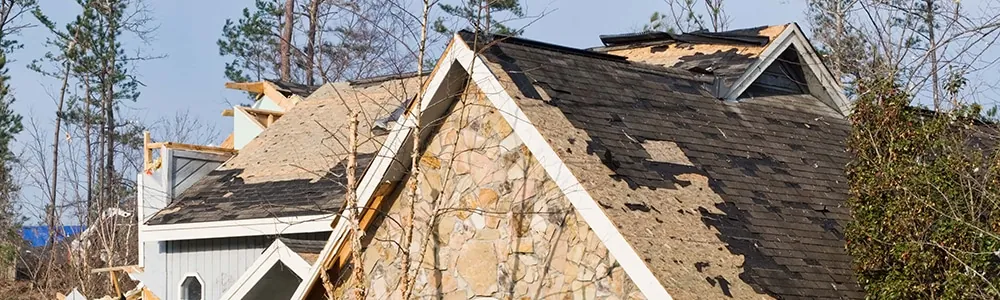

Roof Leak After a Storm? Here's What to Do Before It Gets Worse
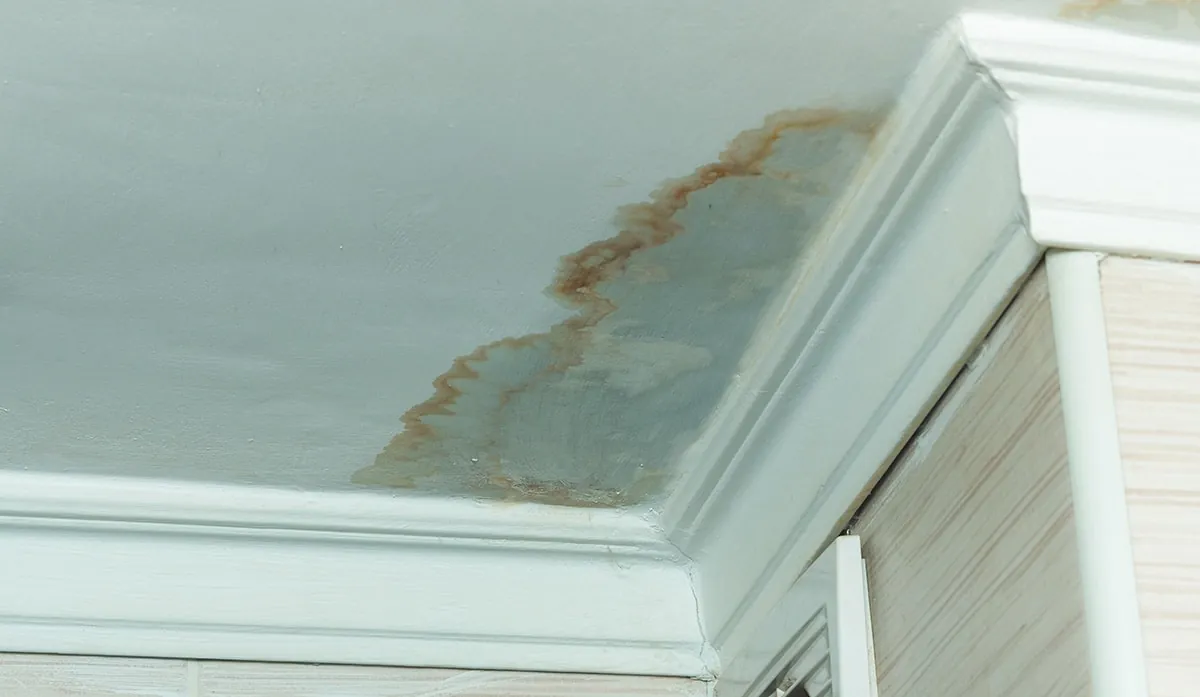
A small ceiling stain after a storm can become a much bigger repair. Faster than most homeowners realize.
A single quarter-sized drip mark on a Grand Rapids living room ceiling, the kind that shows up the morning after a storm and looks almost decorative compared to the storm itself, can be the visible end of damage that includes wet insulation in the attic, a compromised roof deck, the early stages of mold growth, and a slow stain on drywall that will eventually fail. Most of that damage is hidden. All of it gets worse with every additional storm and every additional day of moisture sitting where it shouldn't.
If you're seeing any sign of a roof leak after a storm in Grand Rapids, a fresh ceiling stain, a drip, a water spot, a soft patch of drywall, or actual water on the floor, this guide is built for the next hour. Work through it in order. The goal is simple: stop the damage from getting worse, document what's there, and get a roofer on it before the next rain.
First: confirm it's actually a leak and not condensation
Before assuming the worst, make sure what you're seeing is a leak and not something else that mimics one.
Condensation marks tend to be diffuse, fuzzy-edged, and appear in cold weather around windows, on uninsulated walls, or where warm interior air meets a cold surface. A roof leak after rain tends to be more localized, a defined spot, sometimes circular, often with a darker ring around the edge as the water dries and pulls drywall dust to the surface. If you put a finger on a leak stain, the drywall feels soft or slightly cooler than the surrounding area. Condensation stains are usually surface-level.
A plumbing leak in an upstairs floor can also look like a roof leak. If the stain is directly below a bathroom, kitchen, or laundry room, check there first. Run water briefly and see if the stain grows. If it doesn't, the source is more likely above the bathroom, not in it, meaning the roof.
Once you're confident it's a roof leak, move into the action steps.
Step 1: Contain the water that's already inside
The first move is not the roof. It's the drywall.
Place a bucket, deep pan, or large bowl directly under any active drip. If the leak is large or the location makes a bucket awkward, lay down a tarp or several towels and stack a container on top to catch what you can.
If the ceiling shows a visible bulge of trapped water, a sagging area, a heavy bubble, or drywall that looks like it's about to give, drain it deliberately. Place a bucket underneath, take a screwdriver or knife, and gently puncture the lowest point of the bulge from below to let the water drain in a controlled stream. This sounds counterintuitive, but it's much better than letting the ceiling fail on its own. A pooled-water ceiling failure can collapse a section of drywall onto whatever's beneath it, including furniture, electronics, and people.
Move anything valuable out from under the leak: electronics, art, paperwork, rugs that can't take water, furniture you care about. Even a slow drip will travel sideways along framing and find a different exit hole later if the original spot gets blocked.
Turn off any electrical fixtures in the affected room at the breaker if water is anywhere near light fixtures, outlets, or ceiling cans. Water + electricity is not a risk worth taking just to leave a light on.
Step 2: Document everything before you do anything else
This is the step homeowners skip, and it's the most expensive one to skip.
Before you clean up, before any roofer or insurance adjuster sees it, photograph and video everything. Date-stamped photos are ideal; most modern phones automatically embed that info.
Capture the ceiling stain or drip from a distance and up close. Photograph the bucket, the wet drywall, any water on the floor, and any visible water damage to walls, furniture, or possessions. If water is coming down a wall, photograph the source point and the trail. If you can safely access the attic, photograph any wet insulation, damp rafters, water-stained decking, or daylight visible through the roof from inside. Save weather alerts on your phone showing the storm that caused this: date, time, severity.
This documentation becomes the evidence base for an insurance claim if one is appropriate. It also gives the roofer a clear picture of what they're walking into. And critically, it exists now in a way it won't later, once cleanup and repair begin.
Step 3: Get temporary protection in place before the next rain
A storm roof leak in Grand Rapids is rarely a one-time problem. Once a leak path is open, every subsequent rain and West Michigan rarely waits long between systems, pushes more water through the same hole. The damage compounds.
Temporary protection is the bridge between the leak and the full repair. In practice, that usually means professional emergency tarping.
A properly installed emergency tarp covers the leaking section of roof, extends well past the damaged area on all sides, and is anchored in a way that survives wind. A professional tarp installation is reimbursable under most homeowner policies, and a roofer can typically respond within a day or two, sometimes the same day for active openings.
Do not climb your roof to tarp it yourself. This is the section worth repeating in any storm damage article because it's where homeowners get hurt. Wet, damaged shingles are slippery. Soft spots from hail bruising are exactly where a foot punches through. Falls from ladders and roofs cause thousands of serious home injuries every year, almost all to homeowners who were trying to take a quick look or do a fast fix. The wrong tarp installed badly fails in the next wind and may not be reimbursable. The right tarp installed correctly buys you the time you need to handle the repair properly.
While you're waiting on emergency repair, you can also: place absorbent material along the edge of the leak path inside the attic if it's safe to access, run a fan in the affected room to slow mold growth, and pull back wet insulation away from electrical wiring if you can do so without disturbing the source of the leak. These are not fixes; they're holding actions.
Step 4: Understand what makes a roof leak worse the longer it sits
This is the part that gets glossed over. A leaking roof after rain is not just a cosmetic ceiling problem. Here's what happens underneath, in order of how fast each one progresses.
The roof deck absorbs water.
Once shingles and underlayment fail, the wood decking below starts taking on moisture. Wet decking is structurally weaker and can soften to the point where new shingles cannot be properly fastened to it. A leak ignored for a season can turn a shingle-replacement job into a deck-replacement job.
Insulation soaks and compacts.
Fiberglass or cellulose insulation loses most of its R-value when wet and rarely fully recovers even after drying. Wet insulation increases the cost of subsequent repairs because it has to be removed and replaced.
Mold begins to develop.
In warm conditions, mold can start growing on wet drywall, framing, and insulation within 24 to 48 hours. Once mold is established, the cost of remediation rises sharply, and so does the health risk to the people in the home. This is the single fastest-escalating cost of an unaddressed roof leak.
Drywall and paint fail.
What started as a small stain expands as the gypsum core of the drywall absorbs water, sags, and eventually delaminates. Paint blisters. Texture peels. The ceiling becomes its own repair project on top of the roof repair.
Electrical components corrode.
Water that runs along ceiling framing finds its way to junction boxes, fixtures, and outlets. Even after the leak is fixed, the electrical work in that area may need to be inspected and repaired separately.
Framing damage compounds.
In severe or prolonged cases, water that reaches rafters, ceiling joists, or wall studs can lead to rot. This is rare in a single-event leak but increasingly common in leaks that go unrepaired through multiple seasons.
The pattern is consistent: a small leak handled in the first 48 hours is usually a contained repair. A small leak ignored for weeks or months becomes a much larger project involving the roof, attic, ceiling, possibly insulation, possibly electrical, possibly mold remediation.
When to call for emergency roof repair in Grand Rapids
Some roof leaks can wait until the next available appointment. Most should not.
Treat it as emergency roof repair territory if you have any of the following: active dripping during ongoing rain, water entering in multiple locations, a visible opening or daylight through the roof from inside the attic, a fresh ceiling bulge, water near electrical fixtures, a tree or large branch on the roof, or any sagging in the ceiling or roofline.
Call for non-emergency same-week service if the leak appears slow, the stain looks contained, the storm has passed, the forecast is dry for the next several days, and there's no visible structural concern.
When in doubt, call. A reputable local roofer will tell you over the phone whether your situation can wait a few days or whether they need to come out today.
What to expect from a Grand Rapids emergency roof response
A typical emergency roof repair call in Grand Rapids looks roughly like this. You call, describe the situation, send photos if possible, and get a same-day or next-day window for an emergency visit depending on storm volume in the area.
When the crew arrives, they assess the leak source from inside if possible and from the roof exterior, install temporary protection, usually an emergency tarp, to stop further water entry, and provide documentation of what they found and what they did. A more thorough inspection and repair plan follows, usually within a week, once the immediate situation is stable.
Costs vary based on accessibility, severity, and time of day. Reputable roofers will be transparent about emergency response fees before they come out, and many will document the work in a way that supports an insurance claim if the leak is tied to a covered storm event.
Request emergency roof repair or tarping help
Above Roofing provides emergency roof repair, professional tarping, and storm damage inspections across Grand Rapids and the surrounding West Michigan communities, including Wyoming, Kentwood, Grandville, Walker, Rockford, Ada, Cascade, Belmont, Comstock Park, and Sparta.
If you're dealing with a roof leak after a storm, active or just discovered, call us first. We will help you stabilize the immediate situation, document the loss for insurance, and walk you through the next steps so a manageable leak doesn't become a much bigger project.
For more on emergency response, claim documentation, and storm-related roof repair, visit our Storm and Hail Damage Roof Repair page.
Frequently asked questions
My ceiling has a small stain after a storm. Is that really a leak?
Usually yes. A fresh, defined ceiling stain after a storm almost always indicates water has come through the roof and traveled to that spot. It rarely means the leak is small — it just means you're seeing the visible end of the path the water took. Treat it as a leak and have a roofer inspect.
How fast can a roof leak get worse?
Faster than most homeowners expect. Mold can begin developing on wet drywall and insulation within 24 to 48 hours in warm conditions. Roof decking can absorb significant moisture within days. Each additional rain through an open leak path adds to the damage. The first 48 hours are when intervention is cheapest.
Can I tarp my own roof temporarily?
You should not. Wet and damaged shingles are slippery, and roof falls are one of the most common serious home injuries. A professional emergency tarp is reimbursable under most homeowner policies and is the safest path. Stay on the ground and call a roofer.
Will insurance cover a roof leak after a storm?
Often, if the leak is tied to a documented storm event and the damage is reported promptly. Coverage depends on your specific policy. Document everything before cleanup and call your insurer with photos and inspection notes in hand. A local roofer can support the claim with written documentation.
How quickly can someone come out for emergency roof repair in Grand Rapids?
Same-day or next-day in most cases for active leaks, depending on storm volume. If the leak is severe — active dripping, daylight through the roof, ceiling bulge, structural concerns — call as soon as you confirm it. Reputable roofers prioritize emergencies.
What if I find the leak days after the storm?
Call anyway. A delayed-discovery leak is still worth documenting and inspecting. Some types of damage take time to show themselves, especially when the storm only saturated the area for a short time. The longer it sits, the more it costs to repair, so a delayed discovery becomes urgent the moment you find it.
Related articles
Grand Rapids Storm Damage Checklist for Homeowners

Best Roofer for Storm Damage Insurance Claims in Grand Rapids
What to Photograph Before Filing a Roof Insurance Claim