
Should You File a Roof Insurance Claim After Hail in Michigan?

Not every roof issue should become a claim.
That sentence catches a lot of Michigan homeowners off guard, because the assumption after a hail event is that filing is the obvious next step. Sometimes it is. Sometimes it costs you more in premium increases than the claim was worth. And sometimes the damage is real, but the timing, documentation, or claim approach turns what should have been a clean approval into a denial.
A roof insurance claim in Michigan is not a yes-or-no decision based on whether hail fell. It is a decision based on what was actually damaged, how that damage is documented, what your specific policy covers, and whether the cost to repair clearly exceeds your deductible. This guide walks through how to think about that decision, what documentation strengthens any hail damage insurance claim, and what to do before you pick up the phone to call your insurer.
Important note up front: this article is general information for homeowners thinking through the decision. It is not legal advice, and it is not a guarantee of coverage. Your specific policy language, deductible, and insurer's process determine what is actually covered. Always confirm with your own insurance agent.
Want a quick reference you can save? Download the printable Hail Damage Roof Insurance Claim Checklist (PDF) — everything in this guide condensed to one page you can take to your inspection and keep through the claim.
Why the "should I file" question matters
Filing a claim is not free. It takes time, often pulls you into a multi-week documentation process, and can affect your homeowner premium going forward depending on your insurer and claims history. There are also claims that get denied, not because the damage was not real, but because the damage was poorly documented, reported late, or attributed to causes the policy treats differently.
On the other side, not filing when you should can leave you paying for a repair that should have been a covered loss, and it can also leave compromised roofing material on your home that quietly causes more expensive problems later.
The right move is to make this decision on purpose, with information, instead of by default. That is what this guide is designed to help with.
First, understand what your policy actually covers
Most homeowner policies in Michigan include some form of coverage for storm damage to the roof, but the details vary widely. Three things determine how a hail damage insurance claim will be handled.
Coverage type.
Some policies cover the roof at full replacement cost. Others cover only the actual cash value, which factors in depreciation based on the age of the roof. The same damage on the same roof can produce very different payouts under those two policies.
Deductible.
Some Michigan policies carry a separate, higher deductible for wind and hail events compared to the standard deductible. That number is the first cost you absorb out of pocket. If your hail damage repair cost lands just at or barely above that deductible, the math may not favor filing.
Exclusions and conditions.
Policies often include language about how damage must be reported, within what timeframe, and what kinds of pre-existing wear or maintenance issues are excluded. Damage that sat undocumented for a long time can fall under those exclusions even if a storm clearly caused it.
You do not need to memorize policy language. You do need to look at your declarations page, find your wind and hail deductible, and call your agent if anything is unclear before you start the claim process. That five-minute conversation can save you weeks.
When filing usually makes sense
There is no universal cutoff, but the following situations generally point toward filing a roof insurance claim in Michigan.
You have a professional inspection report showing documented hail damage across multiple areas of the roof, with clear photos of impact marks, granule loss, soft spots, or compromised flashing. The estimated repair or replacement cost is clearly above your wind and hail deductible, often by a meaningful margin rather than just a few hundred dollars. The damage is recent and tied to a specific severe weather event that you can document with weather alerts, news coverage, or local storm reports. The damage is visible enough that an adjuster walking the roof will see what your inspector saw. Your roof was in reasonable condition before the storm, with normal wear for its age rather than pre-existing widespread issues.
When most of those boxes are checked, filing is usually the right path. The claim is well-supported, the cost is well above your deductible, and the documentation is solid.
When filing may not make sense
The flip side is equally important. Some situations point toward handling the repair outside of insurance.
The damage is minor, and the estimated repair cost is at or just slightly above your deductible. The roof was already showing significant wear from age, and the storm damage is mixed in with conditions an adjuster is likely to attribute to normal aging. The storm event is older than your policy's reporting window, and you can no longer credibly document when the damage occurred. You have filed multiple claims in the recent past, and adding another may affect your premiums in a way that costs more long-term than the payout. The "damage" turns out, on professional inspection, to be cosmetic granule loss or wear that is not actually compromising the roof's performance.
In any of these cases, a smaller out-of-pocket repair often costs less in the long run than filing a claim that may not produce a meaningful payout.
The most common mistake: filing before inspecting
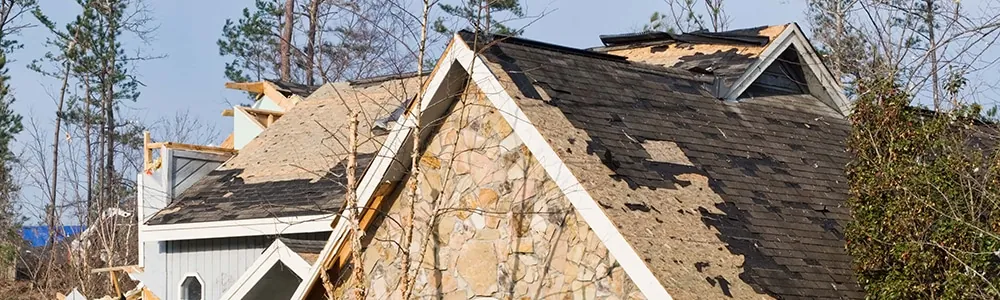
If there is one pattern that causes problems with roof damage insurance claims in Michigan, it is this one: the homeowner calls insurance first, the adjuster comes out and does a quick visual, and the claim is approved or denied based on what was visible during that single visit.
The problem is that hail damage is often not fully visible without a roofer's hands-on inspection. Soft spots, bruising under granules, and damage on slopes that the adjuster did not walk can all be missed in a brief visit. If the claim is then approved at a low amount based on what was visible, you may not be able to reopen it later when the full scope becomes clear.
The fix is simple. Inspect first, document, then file.
A professional storm damage roof inspection produces a written report with photos covering the full roof. That report goes to the insurer along with the claim. The adjuster then walks the roof with more information than they would otherwise have, often alongside the roofing contractor, and the scope of the loss is established correctly the first time. This is what "storm damage claim help" actually looks like in practice, not someone navigating the insurance system for you, but a thorough inspection and clean documentation that makes the system work the way it is supposed to.
Your hail damage insurance claim checklist
Use this list before you call your insurance company. Each item makes the claim stronger and the process faster.
Before the inspection
- Confirm the date and time of the storm event. Save weather alerts, news clips, or local storm reports.
- Walk the property from the ground and take date-stamped photos of every visible sign of damage — gutters, downspouts, AC unit, garage door, siding, screens, fallen debris.
- Photograph the inside of the home as well: ceiling stains, drips, attic moisture, water on flooring.
- Do not throw away damaged material in the yard, such as fallen flashing pieces, shingle fragments, or debris, until they have been photographed.
- Locate your insurance declarations page and note your wind and hail deductible.
During the inspection
- Hire a local Grand Rapids roofer with a verifiable business address, not a door-knocker who showed up after the storm.
- Confirm the roofer will provide a written inspection report with photos, not just a verbal summary.
- Make sure the inspection covers all slopes, flashing, penetrations, gutters, soffit, fascia, and the attic underside.
- Ask the roofer to specifically distinguish storm damage from pre-existing wear in their notes.
Before you file
- Read the inspection report carefully and ask the roofer to walk you through anything that is unclear.
- Compare the estimated repair scope to your deductible. If the gap is small, weigh whether filing is worth the impact on your premium.
- Call your insurance agent if you have policy questions before filing. Asking general questions is not the same as filing a claim.
- Decide consciously whether to file. If yes, gather the inspection report, photos, weather documentation, and your policy details before making the call.
During the claim
- Ask your roofer to be present for the adjuster's visit if possible. Walking the roof together prevents miscommunication and missed damage.
- Keep every document, email, and voicemail related to the claim in one folder.
- Do not authorize any repair work beyond emergency tarping until you have a clear approved scope from the insurer or a clear decision to handle the repair out of pocket.
- If the initial scope feels too narrow compared to your inspection report, ask your roofer about a supplemental claim before signing off.
What "storm damage claim help" looks like from a good roofer
A roofing company in Michigan cannot give you legal advice, cannot guarantee coverage, and should not pretend to. What a good roofer can do is help you produce the kind of documentation that makes the insurance process work the way it is supposed to.
That includes a written inspection report with photos clearly tied to storm-related conditions, willingness to be present during the adjuster's visit and walk the roof together, willingness to discuss findings with the adjuster in technical terms, and honesty about when the damage is real and when it is not. A roofer who pressures you to file a claim regardless of what the roof looks like, promises to "get you a new roof on insurance" before they have even climbed up there, or asks you to sign over your insurance proceeds in your driveway, is not the help you need.
The best storm damage claim help is unglamorous: thorough documentation, clear communication, and a willingness to slow down so the claim is correct rather than fast.
Special considerations for Michigan homeowners
A few Michigan-specific notes worth keeping in mind.
Storm seasons in West Michigan can include both severe summer thunderstorms with hail and damaging wind, and winter ice events that produce a different kind of roof damage. If you are filing for hail, make sure your documentation ties to a hail event, not to ice or general winter wear. Many policy disputes start when storm damage from one event gets mixed in with conditions from a different season.
Insurance reporting timeframes in Michigan vary by carrier. Some policies require notice "as soon as reasonably possible," while others have more specific windows. The shorter and clearer your gap between the storm date and the claim, the better.
Michigan is a state where insurance complaints can be escalated through the Department of Insurance and Financial Services if a homeowner believes a claim is being handled improperly. This is not a first step, but it is worth knowing that the path exists.
The decision in one sentence
If you have documented hail damage that meaningfully exceeds your deductible, file with confidence. If you have minor damage close to your deductible, an out-of-pocket repair is often cleaner. If you are not sure which one you have, the inspection is what tells you, and that step costs nothing.
Get inspection documentation before filing
Above Roofing provides free, written storm damage roof inspections across Grand Rapids and the surrounding West Michigan communities, including Wyoming, Kentwood, Grandville, Walker, Rockford, Ada, Cascade, Belmont, Comstock Park, and Sparta. Each inspection produces a documented report with photos that you can use to make an informed decision about whether to file a roof insurance claim in Michigan and to support the claim if you do.
There is no obligation to file, no obligation to hire us for the repair, and no pressure either way. The point of the inspection is to give you the truth about your roof. What you do with that information is your decision.
For more on the broader storm damage process and the insurance claims article that pairs with this guide, visit our Storm and Hail Damage Roof Repair page.
Frequently asked questions
Should I always file a roof insurance claim after hail in Michigan?
No. Filing makes sense when documented damage clearly exceeds your wind and hail deductible. For minor damage near the deductible, an out-of-pocket repair is often the better path. The inspection report tells you which situation you are in.
Will filing a roof insurance claim raise my premiums?
It can. The impact depends on your insurer, your claims history, and the size of the claim. Your insurance agent can give you a more specific answer for your policy, but it is a fair factor to weigh when deciding whether to file.
How long do I have to file a hail damage insurance claim in Michigan?
Most policies require prompt notice after the storm event, with specific timeframes that vary by carrier. The longer you wait, the harder it becomes to tie damage to a specific storm. Check your policy or call your agent, and treat filing as a same-week or same-month decision rather than a same-year one.
Do I need a roof inspection before I file a claim?
You do not have to have one, but you should. A written inspection report with photos gives the insurer something concrete to work from, prevents missed damage during a brief adjuster visit, and protects you if the scope of repair turns out to be larger than the adjuster's first estimate.
Can a roofer help me with my insurance claim?
A reputable roofer can provide the inspection documentation that supports your claim and can be present during the adjuster's visit. They cannot give legal or coverage advice, and you should be cautious of any contractor who asks you to sign over insurance proceeds or guarantees coverage outcomes.
What if my claim is denied but I still have damage?
You typically have the right to request a re-inspection, dispute the decision, or escalate through your state insurance department. A second professional inspection with additional documentation often helps. This is one situation where having a careful inspection report from the start makes the dispute path much easier.
Related articles
Grand Rapids Storm Damage Checklist for Homeowners

Best Roofer for Storm Damage Insurance Claims in Grand Rapids

What to Photograph Before Filing a Roof Insurance Claim