
Storm Damage Roof Repair in Grand Rapids: What Homeowners Should Do First
Before you call insurance, do these three things. That single decision can be the difference between a smooth claim, a cleanly repaired roof, and a fast return to normal, versus weeks of phone calls, water damage that spreads into your drywall, and a payout that does not cover what it should.
Storm damage roof repair in Grand Rapids is rarely just about the roof. It involves timing, documentation, temporary protection, and choosing a contractor who handles all three. The right first moves protect your home, your finances, and your patience. The wrong ones cost you all three.
If a storm has just hit your home, work through this guide in order. It is built to keep you calm, keep you safe, and keep the situation from getting worse while you figure out the next step.
First, make sure your home is safe
Before any photos, calls, or contractor research, take a quick safety pass through the house. Storm damage that affects the roof can also affect things you cannot see. Wiring, attic supports, ceiling drywall, and water that is already pooling somewhere above your head.
Walk through each room and look at the ceilings. Bulging drywall, discoloration that is spreading, or visible drip lines mean water is already inside the home and may be pooling out of sight. A heavy water bubble on a ceiling can let go suddenly, and the weight of the pooled water can take a section of the ceiling down with it. If you see a bulge, place a bucket under it and gently puncture the lowest point with a screwdriver from underneath to drain the water in a controlled way rather than waiting for the ceiling to give out.
If electricity is flickering, outlets are wet, or you smell anything burning, leave the affected area and call your utility. Do not touch anything that combines water and electricity.
Walk the exterior of the property only after the wind has stopped and only on the ground. Look at your roof line, gutters, siding, and yard. Do not climb a ladder, do not climb onto the roof, and stay away from any downed lines.
Once you have confirmed the home is safe to be in, you can move into damage response mode.
The three things to do before calling insurance
Insurance is part of the process for serious storm damage roof repair in Grand Rapids, but the call you make to your insurer is more useful if you have already done three specific things. Doing these in order also gives you better leverage and a smoother claim if you decide to file.
1. Document everything visible from the ground.
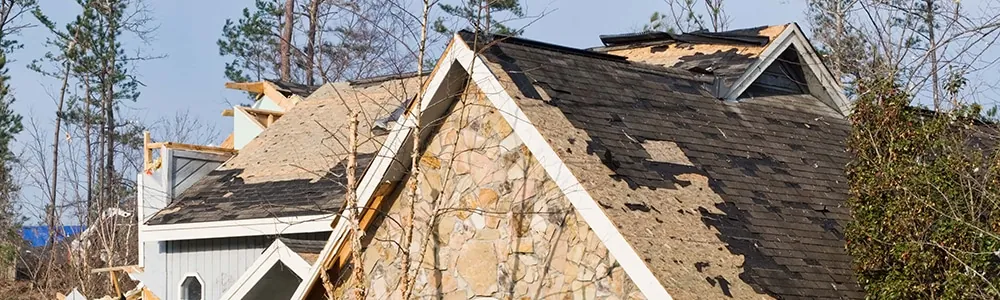
Walk around your home and take date-stamped photos and short videos of any damage you can see safely. Capture missing or lifted shingles, dented gutters and downspouts, dimpled siding, bent window screens, hail dents on your AC unit and garage door, fallen branches, and any debris in the yard. If you have an active leak inside, photograph the interior water damage too — wet drywall, stained ceilings, water on the floor. Save weather alerts from your phone showing the date and time of the storm. This is the evidence base for any claim, and it does not exist later if you do not capture it now.
2. Stabilize the situation to prevent more damage.
Most homeowner policies expect you to take reasonable steps to prevent the damage from getting worse. That means moving valuables out from under leaks, putting buckets under drips, covering electronics and furniture, and requesting a professional tarp or temporary roof protection if there is an active opening. Do not climb your roof to tarp it yourself. That is one of the most common roof injuries, and a professional tarp installed correctly is the kind of thing insurance reimburses. A tarp you put up wrong, that falls off in the next storm, is not.
3. Schedule a professional storm damage roof inspection.
Have a local roofer inspect your roof and produce written documentation before you call your insurance company. A clear inspection report with photos gives you something concrete to file with. It also helps you avoid the most common mistake: filing a claim, getting an adjuster's quote based on what they could see in a quick visit, and only later discovering the damage was actually much more extensive. The order matters. Inspect, document, then file.
After those three steps are done, you are in a strong position to make the call.
When to call for emergency roof repair in Grand Rapids
There is a difference between damage that needs a scheduled inspection and damage that needs immediate, same-day attention. If you have any of the following, you are in emergency roof repair territory and should call right away rather than waiting for a routine inspection slot.
You see active water entering the home, especially in volume. A drip on a ceiling is a problem. A stream is an emergency. Any opening in the roof during ongoing rain needs immediate tarping to prevent escalating water damage to the decking, insulation, drywall, flooring, and anything stored in the affected rooms.
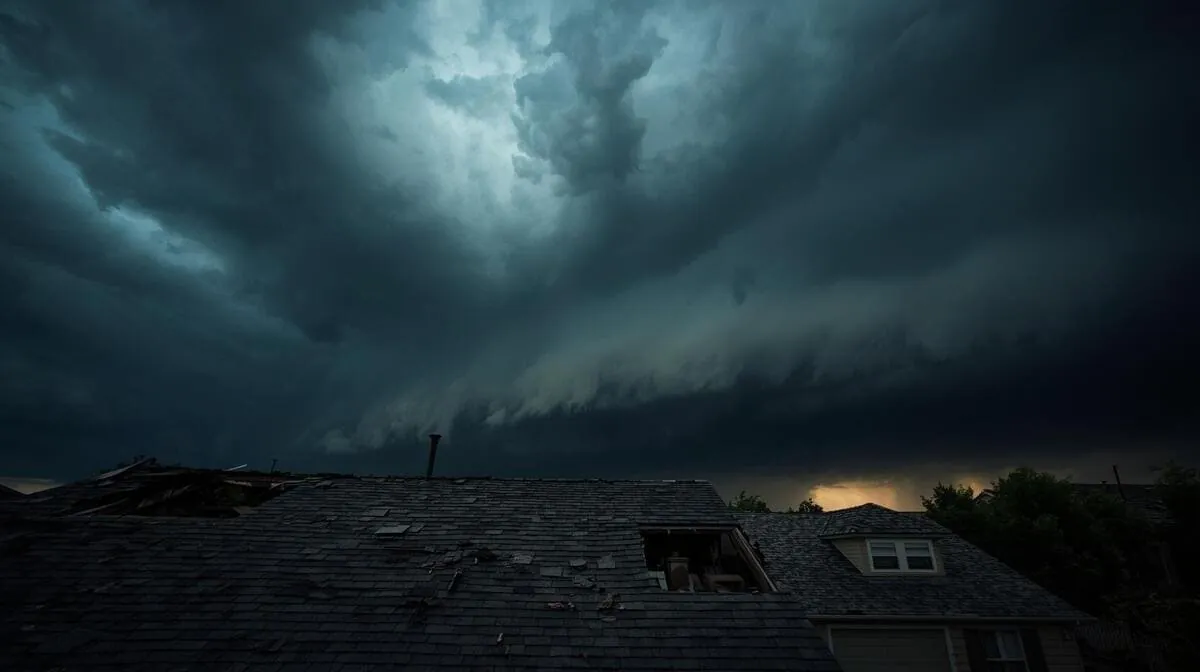
You can see daylight through your roof from inside the attic or from a ceiling opening. That means part of the roof system has been removed by the storm, not just damaged. Until that opening is covered, every minute of rain is causing new damage.
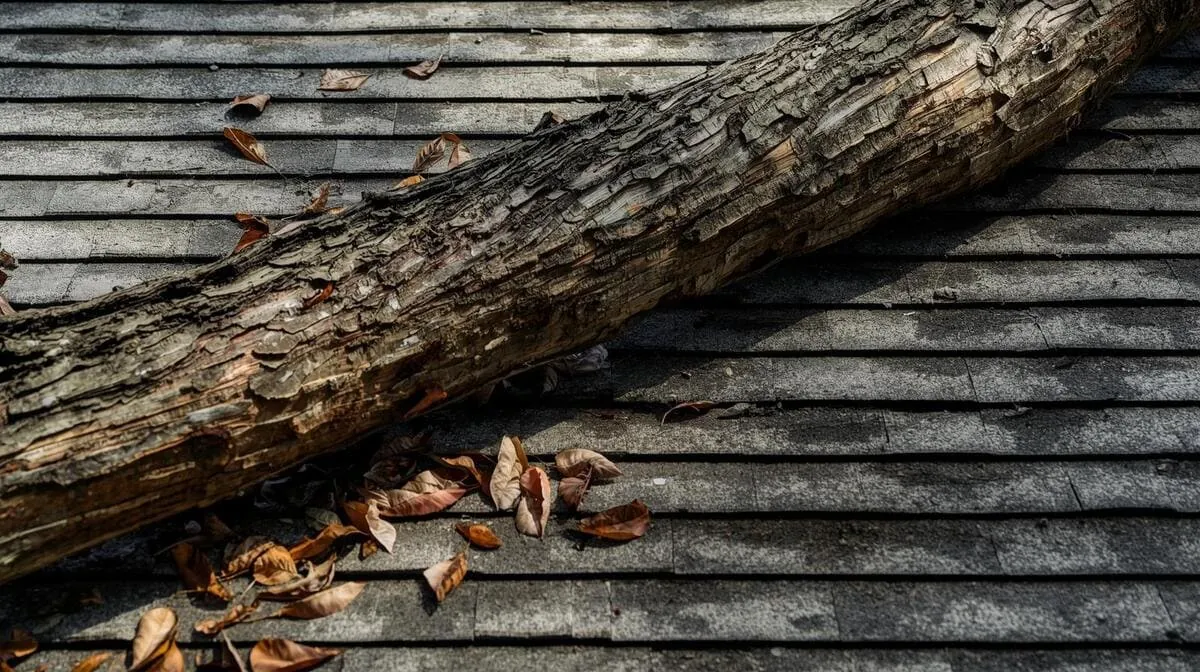
A tree, large branch, or other object has struck the roof or is resting on it. The roof structure may be compromised in ways that are not visible from the ground, and the object needs to be removed by someone trained to do that without making the damage worse.
Large sections of shingles are missing, especially in clusters or strips. Underlayment that is exposed for more than a short time becomes a leak path in the next rain. Wind that ripped off shingles can also have lifted seams around flashing, vents, and the ridge.
The roof is sagging or showing visible structural deformation. This is rare but serious. Sagging suggests the deck or supporting structure has failed and the affected area should be treated as unsafe.
For any of these, call for emergency roof repair in Grand Rapids first, and worry about the long-term repair plan after the home is stabilized.
What a storm damage roof inspection should include
Once the home is safe and stable, the next step is a real storm damage roof inspection. Not a sales visit. Not a five-minute look. A documented assessment that gives you the information you need to make the right decisions.
A proper inspection covers the full roof field on every slope, looking for missing, lifted, cracked, or bruised shingles, granule loss, and signs of wind or hail impact. It covers all the penetrations, chimneys, vents, skylights, pipe boots, and the flashing around them, because flashing failures cause more leaks than shingle damage does. It includes the gutters, downspouts, drip edge, soffit, and fascia, all of which take impact in storms. And it includes the attic underside whenever access is available, because attic leaks, water stains on rafters, and damaged decking tell a more honest story than the exterior alone.
The inspection should produce a written report with photographs, observed conditions, and recommended next steps. That report is the deliverable. It is what you use to decide whether to file a claim, whether to repair or replace, and what scope of work to authorize.
If a contractor will not provide written documentation, or will only verbally describe damage they say they saw, that is a warning sign. A good storm roofer documents, explains, and meets deadlines.
Should you call insurance or not?
Not every storm-related roof problem belongs in an insurance claim. Whether to file depends on three things: the extent of the damage, your deductible, and your policy's storm and hail coverage. There is no universal answer, but the inspection report makes the decision much easier.
If documented repair costs are well above your deductible and the damage was caused by a covered storm event, filing is usually the right call. If the damage is minor, or the cost to repair is at or just above your deductible, many homeowners choose to pay out of pocket to avoid affecting future premiums. A good roofing partner will help you understand what was found and what the realistic cost of repair looks like, without pressuring you toward a particular decision.
What you should not do is file a claim before you actually know what is wrong. Filing first and discovering the real scope later complicates the claim and sometimes limits what is covered.
If you choose to file, your inspection photos, written findings, and weather documentation go to your insurer along with the claim. The adjuster will then schedule their own visit. Many homeowners find it useful to have their roofing contractor present during the adjuster's visit so the contractor can walk the roof with the adjuster, point out specific damage, and answer technical questions. This is normal and reasonable. A roofer who avoids being present during the adjuster's visit is not a roofer you want handling your claim.
Choosing a roofing contractor after a storm
The hours and days right after a Grand Rapids storm are when out-of-town contractors and pop-up "storm chasers" show up in neighborhoods looking for work. Some are legitimate, but many disappear after collecting deposits, do shoddy work that voids manufacturer warranties, or pressure homeowners into signing contracts that hand over insurance proceeds before any work has been agreed to.
A few simple checks will keep you out of trouble. Choose a local roofing company with a real Grand Rapids presence and a verifiable business address. Ask how long they have been in business in West Michigan. Ask for proof of insurance and licensing. Read recent reviews. Confirm in writing what the warranty is, who provides it, and what it covers. Refuse to sign anything that grants the contractor power to negotiate with your insurance on your behalf before you have agreed to a clear scope of work.
A good local roofer is not in a rush to get you to sign. They are in a rush to get the home stable and the damage documented. Everything else follows from there.
A simple order of operations after a Grand Rapids storm
If you remember nothing else from this guide, remember the sequence. Most of the cost, stress, and second-guessing in storm damage roof repair come from doing these steps out of order.
Step one: Confirm the home is safe to be in. Watch for ceiling bulges, electrical issues, and structural concerns.
Step two: Photograph all visible damage from the ground, inside and out. Save weather alerts and any storm reports.
Step three: Stabilize the situation. Move valuables away from leaks, place buckets under drips, and request emergency tarping for any active opening.
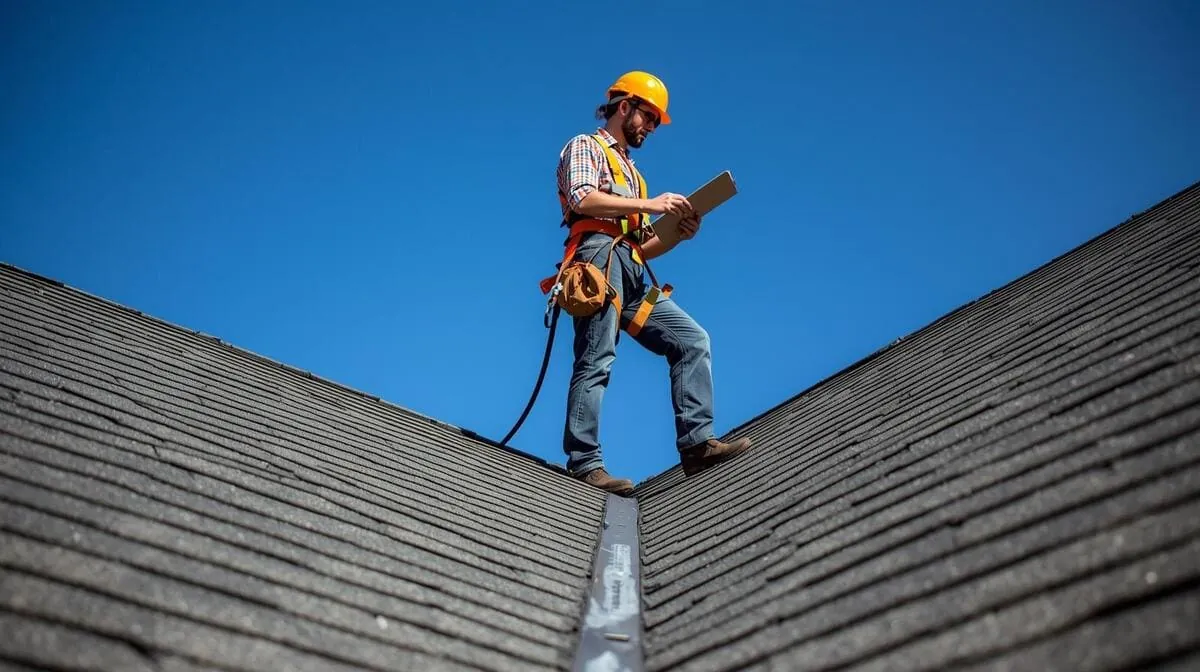
Step four: Schedule a professional storm damage roof inspection with a local Grand Rapids roofer and get written documentation with photos.
Step five: Use the inspection report to decide whether to file an insurance claim, pay out of pocket, or wait.
Step six: Authorize a clear, written scope of work with a contractor you have actually vetted. Do not sign anything in the driveway with someone who knocked on your door an hour after the storm.
This sequence is the difference between a manageable repair and a months-long ordeal.
Call Above Roofing for inspection and temporary protection
Above Roofing provides storm damage roof repair, emergency roof tarping, and free storm damage roof inspections across Grand Rapids and the surrounding West Michigan communities, including Wyoming, Kentwood, Grandville, Walker, Rockford, Ada, Cascade, Belmont, Comstock Park, and Sparta.
If a recent storm hit your home, call Above Roofing first. We will help you stabilize active leaks, perform a documented inspection, walk you through what we found, and support you through the insurance process if a claim makes sense. There is no obligation, no high-pressure pitch, and no contract until you have a clear picture of what your roof actually needs.
For more on inspections, claim documentation, and emergency response, visit our Storm and Hail Damage Roof Repair page. For everything else roof-related in West Michigan, see our Grand Rapids roof repair page.
Frequently asked questions
What should I do first after a storm damages my roof?
Confirm the home is safe, then document all visible damage with photos, then stabilize active leaks with buckets and professional tarping, then schedule a storm damage roof inspection before calling your insurance company. Doing these in order protects your home and strengthens any future claim.
Should I call insurance or a roofer first after storm damage?
Call a local roofer first for a documented inspection. The inspection report and photos give your insurance claim something concrete to work from and help you avoid filing a claim before you actually know the scope of damage.
What counts as emergency roof repair in Grand Rapids?
Active leaking, daylight visible through the roof from inside, missing sections of shingles exposing underlayment, a tree or large object resting on the roof, and any structural sagging all count as emergencies. These need same-day attention rather than a scheduled inspection.
Can I tarp my own roof after a storm?
You should not. Climbing a wet, damaged roof is one of the most common causes of serious home injury, and a tarp installed incorrectly often fails in the next storm. A professional emergency tarp is reimbursable by most homeowner policies and is the safest path.
How fast can someone come out for emergency roof repair?
For active leaks and exposed roof openings, the response is typically same-day or next-day, depending on storm volume. Call as soon as you have confirmed the home is safe and you have a sense of where the damage is.
Should I sign anything with a roofer who knocks on my door after a storm?
Not without doing your homework. Confirm the roofer is local, licensed, insured, and has a Grand Rapids business presence. Never sign over your insurance proceeds before you have a clear, written scope of work. Legitimate roofers are fine with this. Storm chasers are not.
Related articles
Grand Rapids Storm Damage Checklist for Homeowners

Best Roofer for Storm Damage Insurance Claims in Grand Rapids
What to Photograph Before Filing a Roof Insurance Claim