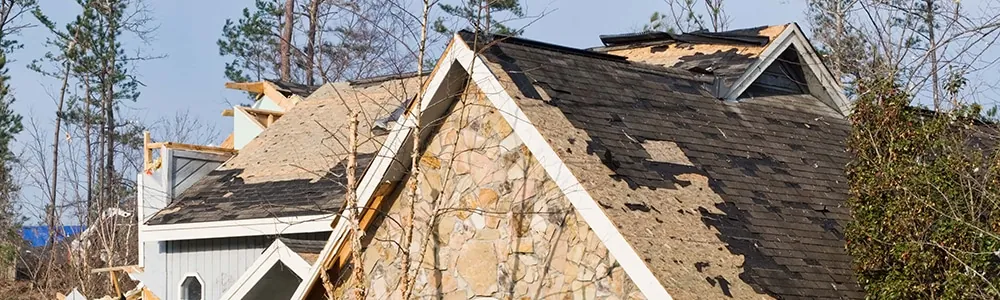

What Does Hail Damage Look Like on Shingles?
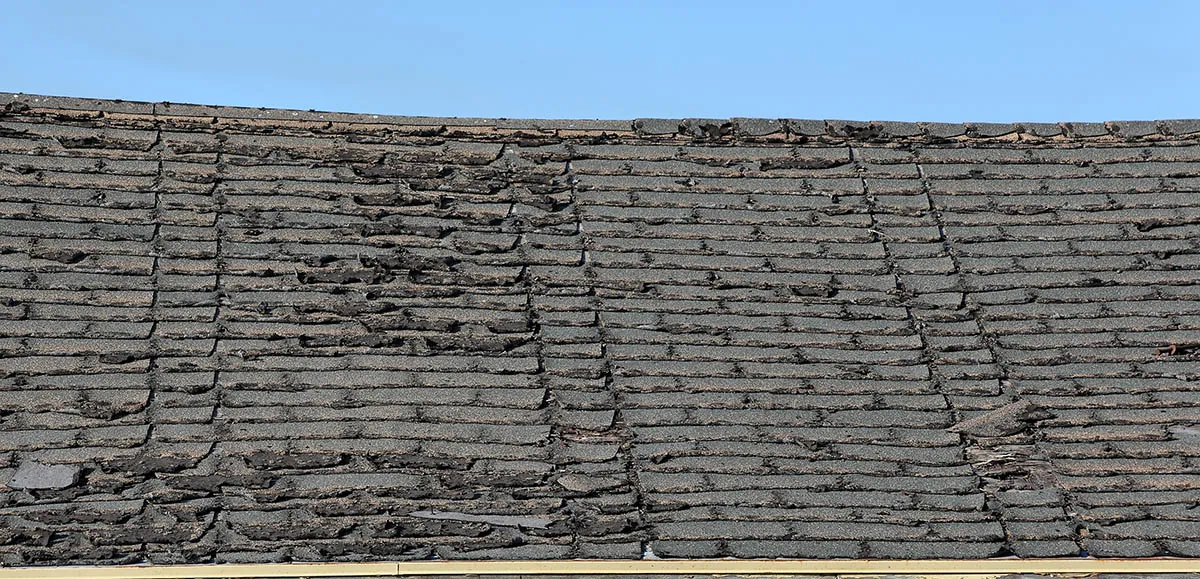
Those dark spots can mean your shingles took a hit. Or they can mean a chimney sweep walked across your roof six months ago, or maybe it was a patch job by the previous homeowner? Or they can mean a couple of shingles were defective from the factory. From the ground, all of those look similar. Up close, on the shingle itself, the differences are obvious, once you know what to look for.
This is a visual identification guide for asphalt shingles, which are what most roofs in Grand Rapids and the surrounding area are made of. We'll walk through what real hail damage actually looks like on shingles, the patterns and textures a trained roofer is looking for, and the common lookalikes that get mistaken for hail damage all the time. By the end, you'll have a clearer idea of what's worth investigating, but the punchline up front is this: do not climb your roof to find out. Request a professional inspection. Falls from roofs are one of the most common home injuries; the answer is the same either way, and the inspection is free.
The four visual signatures of hail damage on shingles
When a roofer climbs onto your roof after a Grand Rapids storm and assesses for hail damage, they're checking the shingles for four specific things. Each one tells a different part of the story.
1. Dark circular impact marks
The most recognizable sign of hail damage is a small, round, darker-than-the-surrounding-shingle spot where a hailstone struck hard enough to dislodge protective granules. The exposed area underneath is the asphalt mat, which is nearly black on most shingles. Against the gray, brown, or earth-toned color of the granulated surface, those dark spots stand out clearly when seen up close.
The marks are usually somewhere between the size of a dime and the size of a quarter, sometimes a half-dollar if the hail was unusually large. They tend to be roughly circular rather than streaked or linear. A roofer doing a careful walk will often mark them with chalk so they can be photographed and counted slope by slope.
One pattern matters: real hail impacts tend to be random in placement across the slope but concentrated on the slopes that faced the storm. If you see a tight cluster of dark spots only along one walking path or in one straight line, that's not hail. Hail does not walk in formation. It hits everywhere.
2. Granule loss in the field and gutters
Granule loss is one of the most reliable signs of hail damage on shingles, and it shows up in two places: on the shingle itself and downstream in the gutter system.
On the shingle, granule loss looks like a small, exposed patch of black asphalt where the colored surface coating has been knocked free. After a serious hailstorm, those patches concentrate on the impact points described above, but they can also appear as scattered thinning across the slope where smaller hailstones removed material without leaving deep bruises.
In the gutters and at the base of the downspouts, granule loss shows up as a buildup of small, sand-like granules — sometimes called "shingle grit." Some accumulation here is normal over time. A sudden new pile right after a storm is not. If you see what looks like coarse black or charcoal sand at the bottom of your downspout splash blocks, the roof is shedding material faster than it should be. That's a clue worth acting on.
Why does granule loss matter so much? Those granules are not decoration. They protect the underlying asphalt from UV exposure. Once they're gone, sunlight starts cooking the asphalt directly, the shingle becomes brittle, and the clock on the roof's lifespan starts running faster. A shingle with significant hail-related granule loss can age years in a matter of months.
3. Bruising and soft spots
This one cannot be seen from a photograph or a drone — it has to be felt. Hail bruising on shingles is what happens when a hailstone hits hard enough to fracture the asphalt mat underneath the surface without necessarily breaking through the top layer of granules.
A roofer detecting bruising will gently press on suspect spots with their thumb or fingertips. A healthy section of shingle feels firm and slightly resistant. A bruised section feels softer, almost spongy, sometimes with a noticeable depression where the impact compressed the mat. The bruise might be perfectly visible as a dark spot on the surface, or it might look completely normal from above — that's part of why hands-on inspection matters.
Bruised shingles are functionally compromised even if they still look intact. Water can find its way into the fractured mat, the impact area becomes a thin spot where the next storm or freeze cycle accelerates failure, and these are the spots that most often turn into leaks a year or two after a hail event that no one ever filed a claim for.
4. Cracks and splits
Older shingles, or shingles already losing flexibility from age and sun exposure, can crack outright under hail impact. These cracks usually appear as fine lines running across the shingle surface, sometimes radiating from a circular impact point.
Cracks are a more advanced form of damage and a clearer path for water to reach the underlayment and decking below. They're especially common on roofs that were already toward the end of their service life when the storm hit. On those roofs, a single severe hail event can move the timeline for replacement from "a few more years" to "now."
What hail damage looks like on different shingle colors
Color affects what you see. On lighter-colored shingles — weathered wood tones, light grays, beiges — the dark impact spots show up clearly because the contrast is high. On darker shingles — dark brown, charcoal, near-black — the dark spots blend in more, and granule loss is sometimes easier to see than the impact mark itself.
This is one reason why a quick visual scan from the ground is unreliable even when the homeowner is looking carefully. A dark shingle can look perfectly fine from the lawn and still be peppered with impact marks that are obvious once you're three feet from the surface in good light.
Hail damage lookalikes that fool people
Several things on a shingle look like hail damage at first glance but are actually something else. A good roofer separates these out in the inspection report so the claim — if there is one — is built on real evidence.
Foot traffic damage.
Chimney sweeps, satellite installers, HVAC techs, and previous roofers can leave footprint patterns of granule loss and scuffing across a roof. These show up in a clear path: a line of disturbed shingles leading from a ladder access point to a chimney or vent. Hail does not move in lines. If the "damage" follows a route a person would walk, it's foot traffic.
Blistering.
Some asphalt shingles develop small, raised blisters as part of their natural aging process, especially in hot climates and on poorly ventilated roof decks. When those blisters pop, they leave behind small round spots that look almost identical to hail impact marks. The tell is consistency: blistering tends to be spread evenly across the roof regardless of which direction the slope faces. Hail damage concentrates on storm-facing slopes.
Manufacturing defects.
Occasionally, individual shingles or batches come from the factory with thin granule coverage or other imperfections. These can show up as small dark patches but usually appear on only a few shingles in a non-random pattern, often along a single course or a particular section that was installed together.
Algae and moss staining.
Dark streaks running down a shingle from the top edge are usually algae, not damage. Algae is a cosmetic and aging issue, not a storm-related one. If the dark spots have a streaky pattern that follows gravity, suspect biology before suspecting hail.
Mechanical damage.
Tree branches, ladders, falling antennas, and animal traffic can all leave scuffs, scrapes, and dings that mimic some types of storm damage. These usually leave a more specific impact signature, a curved scratch, a torn shingle edge, a clear scrape mark, rather than the random circular hits of true hail.
Sorting hail damage from these lookalikes is exactly what a proper hail damage roof inspection is for. An honest inspector will tell you when what you're looking at is hail and when it's something else.
Why ground-level identification is unreliable
The honest answer to "Can I tell if my roof has hail damage from the ground?" is no, not with the precision needed to make a real decision. You can spot strong indicators from the ground, like dented gutters, dimpled siding, or hail dents on an AC unit, and any of those is reason enough to schedule an inspection. But you cannot confirm or rule out hail bruising shingles, count impact marks per square, or detect soft spots without being close to the shingle and physically touching it.
This matters because insurance claims are typically built on per-square damage counts, and adjusters use specific thresholds when deciding whether a slope is repairable or needs full replacement. Those numbers come from up-close inspection, not from a photo taken from the driveway.
It also matters because hail damage that goes unnoticed gets harder to attribute to a specific storm with each passing month. The longer the damage sits, the more it looks like wear, and the more likely it is to be excluded from a future claim.
Do not climb your roof. Request an inspection.
This is the section worth bolding mentally. After a Grand Rapids storm, the temptation to grab a ladder and look for yourself is real. Don't.
Wet, damaged, or hail-pelted shingles are slippery. Soft spots that you cannot see from the ground are exactly where a foot can punch through. Ladder accidents and roof falls are responsible for thousands of serious home injuries every year, and almost all of them happen to homeowners who were just trying to take a quick look.
The same inspection a roofer would do is free, takes about an hour, and produces a written report with photographs. There is no scenario in which climbing the roof yourself is the better move.
If a recent storm passed through your neighborhood and you see any of the ground-level signs — dented gutters, dimpled siding, hail dents on metal items, fallen branches, or granules pooling at downspouts — request a professional hail damage roof inspection in Grand Rapids. That's the safe, accurate, and free way to find out what's actually on your roof.
For more on the broader inspection process, visit our Storm and Hail Damage Roof Repair page.
Frequently asked questions
What does hail damage look like on shingles up close?
Dark circular impact marks where granules have been knocked loose, exposing the black asphalt mat beneath; areas of granule loss where the colored surface has thinned; soft or bruised spots that feel spongy when pressed; and sometimes small cracks or splits, especially on older shingles. The damage tends to be randomly distributed but concentrated on slopes that faced the storm.
What does granule loss from hail look like?
On the shingle, it appears as patches of exposed dark asphalt where the protective colored granules have been removed. In the gutters and downspouts, it shows up as a buildup of sandy, coarse material — often more than the normal slow shedding a roof produces over time.
What is hail bruising on shingles?
Hail bruising is internal damage to the asphalt mat caused by an impact that may or may not have fractured the surface layer. A bruised shingle often looks normal from above but feels soft or spongy when pressed. Bruising is functionally significant damage even when it's visually subtle.
How do you tell hail damage from foot traffic or blistering?
Hail damage is random in placement but concentrated on storm-facing slopes. Foot traffic damage follows visible paths between access points. Blistering tends to be evenly distributed across the entire roof regardless of slope direction. A trained roofer can sort these apart during an on-roof inspection.
Can I tell if my shingles have hail damage without going on the roof?
You can spot signals from the ground, dented gutters, dimpled siding, granules at downspouts, hail dents on AC units, or garage doors. You cannot confirm shingle-level damage without an up-close inspection. Schedule a professional inspection rather than climbing the roof yourself.
Should I climb my roof to look for hail damage?
No. Falls from roofs are one of the most common serious home injuries, and damaged shingles are especially hazardous to walk on. Request a free professional inspection instead. The answer is the same: the report is documented, and you stay safely on the ground.
Related articles
Grand Rapids Storm Damage Checklist for Homeowners

Best Roofer for Storm Damage Insurance Claims in Grand Rapids

What to Photograph Before Filing a Roof Insurance Claim